Losing weight is not only about eating less; it is about choosing the right foods that support your body and provide essential nutrients. The right diet can help control hunger, improve energy levels, and make weight loss easier to maintain.
Including nutritious Foods for Weight Loss in your daily meals can support fat loss by helping you feel full, improving your overall diet quality, and providing your body with the fuel it needs. Choosing nutritious weight loss foods can also make it easier to create balanced meals that support your health and weight-management goals. Rather than following extreme diets or completely eliminating certain food groups, a sustainable approach focuses on balanced meals, appropriate portions, regular physical activity, and healthy lifestyle habits.
In this guide, we will explore 20 healthy foods that can support your weight loss goals, followed by 15 healthy breakfast ideas that you can easily include in your daily routine.
Choosing the right weight loss foods can help you create satisfying meals without relying on highly processed foods.
How Do Foods Help with Weight Loss?
The best weight loss foods can provide protein, fiber, healthy fats, vitamins, and minerals as part of a balanced diet.
Certain foods can support weight management because they are:
- High in protein
- Rich in fiber
- Low in unnecessary calories
- Nutrient-dense
- Filling and satisfying
- Easy to include in balanced meals
If you want to increase your protein intake, check out our guide to [10 Best High Protein Foods for Weight Loss and Muscle Building] for more protein-rich food options.
Protein can help you feel satisfied after eating and is particularly important when trying to maintain muscle while losing body fat. Fiber can also contribute to fullness and supports healthy digestion.
The best approach is not to search for a single “fat-burning food.” Instead, create balanced meals using nutritious ingredients that provide protein, fiber, healthy fats, vitamins, minerals, and other essential nutrients.
Many weight loss foods are naturally rich in protein, fiber, vitamins, and minerals, making them useful choices for satisfying and nutritious meals.
For example, a meal containing grilled chicken, vegetables, and brown rice can provide a combination of protein, fiber, carbohydrates, and micronutrients. This type of balanced meal can be more satisfying than relying on highly processed foods.
The following weight loss foods can be easily included in breakfast, lunch, dinner, and healthy snacks.
20 Best Foods for Weight Loss
1. Eggs
Eggs are one of the most versatile weight loss foods because they can be used in breakfast, lunch, or dinner.
Eggs are a convenient and versatile high-protein food that can help you feel full for longer. They are also easy to prepare and can be included in breakfast, lunch, or dinner.
Eggs contain high-quality protein and provide several important nutrients. Eating a protein-rich breakfast may also help you build a more satisfying meal at the beginning of the day.
Benefits:
- Supports muscle maintenance
- Provides important vitamins and minerals
- Helps increase meal satisfaction
- Easy to prepare
- Works well with vegetables and whole grains
Eggs are a great choice for breakfast or a healthy snack. Try combining boiled or scrambled eggs with vegetables for a balanced meal.
2. Leafy Green Vegetables
Leafy greens are popular weight loss foods because they add nutrients and volume to meals without many calories.
Vegetables such as spinach, kale, lettuce, and other leafy greens are excellent Foods for Weight Loss because they are generally low in calories while providing fiber, vitamins, and minerals.
Adding more vegetables to meals can increase food volume without adding excessive calories.
Benefits:
- High in fiber
- Supports healthy digestion
- Provides vitamins and minerals
- Adds volume to meals
- Can make meals more satisfying
You can add leafy greens to salads, sandwiches, omelets, soups, smoothies, or cooked meals.
3. Chicken Breast
Chicken breast is a lean protein source that can support muscle maintenance and help create satisfying meals.
Protein is an important part of a weight-management diet because it contributes to fullness and provides amino acids needed by the body.
Benefits:
- High in protein
- Relatively low in fat when prepared without excessive oil
- Helps control hunger
- Supports muscle maintenance
- Easy to combine with vegetables
Choose grilled, baked, roasted, or boiled chicken instead of heavily fried chicken when possible.
4. Fish
Fish such as salmon, tuna, sardines, and cod can be excellent additions to a balanced diet. Fish provides protein, while some varieties also contain beneficial fats.
Benefits:
- Provides high-quality protein
- Supports a balanced diet
- Can contribute to meal satisfaction
- Provides important nutrients
- Some fish provide omega-3 fatty acids
You can serve fish with vegetables, brown rice, sweet potatoes, or a fresh salad for a nutritious meal.
5. Greek Yogurt
Greek yogurt is a protein-rich food that can work well as breakfast, a snack, or part of a healthy dessert.
Plain Greek yogurt can be combined with berries, oats, chia seeds, or a small amount of nuts to create a satisfying meal.
Benefits:
- High in protein
- Contains calcium
- Convenient and easy to eat
- Can help make snacks more satisfying
- Works well with fruits and seeds
Choose plain Greek yogurt without excessive added sugar when possible.
6. Oats
Oats are nutritious weight loss foods that can make a filling breakfast when combined with fruit and a protein source.
Oats are a nutritious whole-grain carbohydrate that provides fiber and can be an excellent breakfast choice.
A bowl of oatmeal can be combined with protein-rich ingredients and fruit to create a balanced meal.
Benefits:
- Provides fiber
- Helps make meals satisfying
- Provides long-lasting energy
- Easy to customize
- Works well with fruit and seeds
Try oatmeal with berries, Greek yogurt, chia seeds, or a small amount of nuts instead of relying on highly sweetened toppings.
7. Beans
Beans and lentils are affordable weight loss foods that can provide both protein and fiber.
Beans are nutritious plant-based foods that contain both protein and fiber. They can be particularly useful for people looking for affordable and filling foods.
Examples include:
- Black beans
- Kidney beans
- Chickpeas
- Pinto beans
- White beans
Benefits:
- Provides plant-based protein
- Rich in fiber
- Helps create satisfying meals
- Supports healthy digestion
- Can provide steady energy
Beans can be added to salads, soups, stews, rice dishes, or homemade wraps.
8. Lentils
Lentils are another excellent source of plant-based protein and fiber. They are versatile and can be used in many different meals.
Benefits:
- High in fiber
- Provides plant-based protein
- Helps make meals filling
- Supports balanced meals
- Easy to add to soups and stews
Lentil soup with vegetables can be a simple and nutritious meal option.
9. Avocado
Although avocado contains more calories than many fruits and vegetables, it provides healthy unsaturated fats and other nutrients.
Because avocado is calorie-dense, portion size still matters when weight loss is the goal.
Benefits:
- Provides healthy fats
- Can increase meal satisfaction
- Contains fiber
- Provides important nutrients
- Works well in salads and sandwiches
Try adding a moderate portion of avocado to whole-grain toast, salads, eggs, or vegetable bowls.
10. Nuts
Nuts such as almonds, walnuts, pistachios, and peanuts can provide healthy fats, protein, fiber, and other nutrients.
However, nuts are calorie-dense, so eating appropriate portions is important.
Benefits:
- Provides healthy fats
- Contains protein and fiber
- Can make snacks more satisfying
- Convenient and portable
- Provides important nutrients
A small handful can work well as a snack. Avoid turning a healthy snack into a high-calorie meal by eating large portions.
11. Berries
Berries are nutrient-rich fruits that can be a healthier alternative to many sugary snacks.
Examples include:
- Blueberries
- Strawberries
- Raspberries
- Blackberries
Benefits:
- Provides fiber
- Contains antioxidants
- Adds natural sweetness to meals
- Works well with yogurt and oats
- Can satisfy a desire for something sweet
Add berries to oatmeal, Greek yogurt, smoothies, or salads.
12. Apples
Apples are convenient, portable, and easy to include in a healthy eating routine.
Their fiber content can contribute to fullness, making them a useful snack between meals.
Benefits:
- Provides fiber
- Convenient snack
- Easy to carry
- Naturally sweet
- Supports healthy eating habits
Try pairing an apple with a small serving of nuts or plain yogurt for a more balanced snack.
13. Sweet Potatoes
Sweet potatoes provide carbohydrates, fiber, and various nutrients. They can be used as an alternative to highly processed carbohydrate sources.
Benefits:
- Provides energy
- Contains fiber
- Helps create satisfying meals
- Provides important nutrients
- Versatile ingredient
Bake or roast sweet potatoes and serve them with chicken, fish, beans, or vegetables.
14. Brown Rice
Brown rice is a whole grain that can provide carbohydrates and fiber. It can be used as part of a balanced lunch or dinner.
Benefits:
- Contains fiber
- Provides energy
- Works well with vegetables
- Complements protein-rich foods
- Can be part of balanced meals
A practical meal could include brown rice, grilled chicken, and a large serving of vegetables.
15. Cottage Cheese
Cottage cheese is a protein-rich food that can be used as breakfast, a snack, or part of a meal.
Benefits:
- High in protein
- Helps make snacks satisfying
- Contains calcium
- Easy to combine with fruit
- Useful for quick meals
Try cottage cheese with berries, cucumber, tomatoes, or a small amount of nuts.
16. Chia Seeds
Chia seeds are small but nutrient-dense foods that provide fiber and healthy fats.
They can be added to oatmeal, yogurt, smoothies, or homemade puddings.
Benefits:
- High in fiber
- Contains healthy fats
- Adds texture to meals
- Can increase meal satisfaction
- Easy to include in breakfast
Because chia seeds contain calories, use a reasonable serving rather than assuming that more is always better.
17. Cucumbers
Cucumbers are high in water and generally low in calories, making them a useful addition to meals and snacks.
Benefits:
- High water content
- Adds volume to meals
- Refreshing snack
- Easy to prepare
- Works well in salads
Combine cucumber with tomatoes, leafy greens, grilled chicken, or yogurt-based dressings.
18. Broccoli
Broccoli is a nutrient-rich vegetable that can help add volume and nutrients to meals.
Benefits:
- Provides fiber
- Relatively low in calories
- Contains vitamins and minerals
- Easy to roast, steam, or stir-fry
- Complements protein-rich foods
Add broccoli to chicken dishes, rice bowls, omelets, soups, or salads.
19. Lean Beef
Lean beef provides high-quality protein along with nutrients such as iron and zinc.
Choosing lean cuts and controlling portions can make beef part of a balanced weight-management diet.
Benefits:
- Provides high-quality protein
- Supports muscle maintenance
- Provides important minerals
- Can help make meals satisfying
Choose lean cuts and prepare them using methods such as grilling, baking, or roasting.
20. Green Tea
Green tea is a popular beverage that contains plant compounds called polyphenols.
Together, these weight loss foods provide a variety of nutrients that can support a balanced eating pattern.
It can be a useful alternative to sugary drinks, especially when consumed without large amounts of added sugar.
Benefits:
- Provides hydration
- Contains beneficial plant compounds
- Can replace sugary beverages
- Low in calories when unsweetened
Green tea should not be considered a magic weight-loss drink. A healthy overall diet remains much more important than any single beverage.
Including a variety of weight loss foods throughout the day can help you create meals with different nutrients and flavors.
How to Include Foods for Weight Loss in Your Meals
Creating balanced meals becomes easier when you combine different food groups.
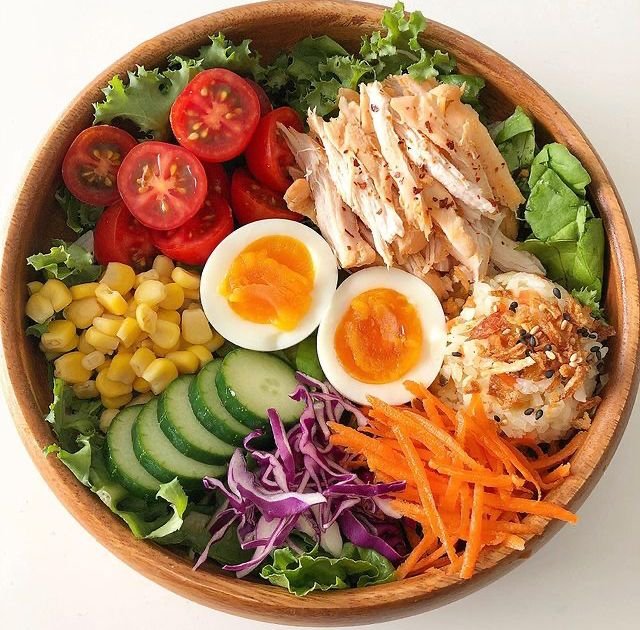
Combining different weight loss foods can help you create meals that are both satisfying and nutritious.
A simple approach is to include:
- A protein source
- Plenty of vegetables
- A source of whole-grain or other nutritious carbohydrates
- A moderate amount of healthy fat
For example, grilled chicken with vegetables, brown rice, and avocado can provide a combination of protein, fiber, carbohydrates, and healthy fats.
Breakfast Ideas
- Oatmeal with berries and chia seeds
- Eggs with vegetables and whole-grain toast
- Greek yogurt with berries and nuts
- Cottage cheese with fruit
- Vegetable omelet with avocado
Lunch Ideas
- Chicken salad with vegetables
- Grilled fish with brown rice and broccoli
- Beans with brown rice and vegetables
- Lentil soup with a side salad
- Chicken and avocado whole-grain wrap
Dinner Ideas
- Grilled chicken with sweet potatoes and vegetables
- Baked fish with broccoli and brown rice
- Lentil and vegetable stew
- Lean beef with roasted vegetables
- Bean and vegetable bowl
Healthy Snacks
- Apples
- Berries
- A small serving of nuts
- Cottage cheese
- Greek yogurt
- Cucumber and other fresh vegetables
Top 15 Healthy Breakfast Ideas for Weight Loss
Breakfast does not have to be complicated to be nutritious. A healthy breakfast should provide enough nutrients and help you stay satisfied until your next meal.
Many weight loss foods can be combined to create simple and nutritious breakfast meals.
Here are 15 simple breakfast ideas using many of the Foods for Weight Loss discussed above.
1. Oatmeal With Berries
Cook oats with water or milk and add strawberries, blueberries, or raspberries.
For additional protein and healthy fats, add Greek yogurt, chia seeds, or a small serving of nuts.
2. Eggs With Vegetables
Scrambled, boiled, or poached eggs can be paired with spinach, tomatoes, onions, peppers, and other vegetables.
This creates a protein-rich breakfast with plenty of nutrients.
3. Greek Yogurt and Berries
Combine plain Greek yogurt with berries and chia seeds.
This breakfast is quick to prepare and can be especially convenient on busy mornings.
4. Avocado and Eggs on Whole-Grain Toast
Top whole-grain toast with a moderate portion of avocado and a boiled or poached egg.
This combination provides protein, carbohydrates, healthy fats, and fiber.
5. Cottage Cheese With Fruit
Combine cottage cheese with strawberries, blueberries, or sliced apples.
You can add a small amount of nuts or chia seeds for additional texture. For more protein-rich food options, check out our [10 Best High Protein Foods for Weight Loss and Muscle Building].
You can add a small amount of nuts or chia seeds for additional texture.
6. Vegetable Omelet
Prepare an omelet using eggs and vegetables such as spinach, mushrooms, tomatoes, onions, and peppers.
This is an easy way to increase your vegetable intake early in the day.
7. Overnight Oats
Combine oats, plain yogurt or milk, chia seeds, and berries in a container.
Leave the mixture in the refrigerator overnight for a quick breakfast the next morning.
8. Apple and Greek Yogurt
If you need a very simple breakfast, combine an apple with plain Greek yogurt.
This provides protein from the yogurt and fiber from the apple.
9. Sweet Potato and Eggs
Cooked sweet potato can be paired with eggs and vegetables.
This combination provides carbohydrates and protein and can be especially useful when you want a more substantial breakfast.
10. Chia Seed Yogurt Bowl
Combine Greek yogurt with chia seeds and berries.
You can add a small amount of nuts for additional healthy fats.
11. Whole-Grain Toast With Cottage Cheese
Spread cottage cheese over whole-grain toast and add sliced cucumber or tomatoes.
This makes a simple savory breakfast with protein and vegetables.
12. Healthy Breakfast Smoothie
Blend plain Greek yogurt, berries, spinach, and a small amount of chia seeds with water or milk.
Avoid adding excessive sugar, syrups, or large quantities of high-calorie ingredients.
13. Eggs and Sweet Potato
Pair boiled or scrambled eggs with roasted sweet potato and vegetables.
This can provide a balanced combination of protein, carbohydrates, and fiber.
14. Oatmeal With Apple and Cinnamon
Prepare oatmeal and add sliced apple and cinnamon.
For additional protein, serve it with Greek yogurt or a small serving of nuts.
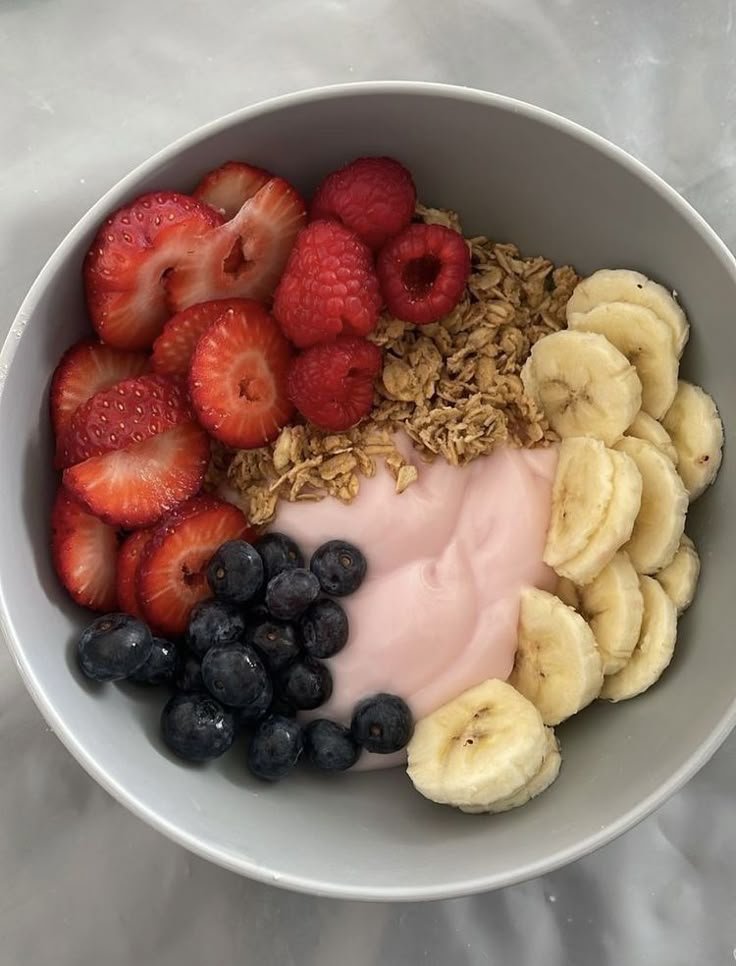
15. Breakfast Bowl
Create a breakfast bowl using Greek yogurt, berries, oats, chia seeds, and a small amount of nuts.
This allows you to combine several nutritious foods in one satisfying meal.
Tips for Successful Weight Loss

Healthy foods can support weight management, but your overall eating pattern matters most.
1. Focus on Whole Foods
Choose minimally processed foods whenever possible.
Including more weight loss foods such as vegetables, fruits, whole grains, beans, and lean protein can help improve the overall quality of your diet.
Vegetables, fruits, whole grains, beans, lentils, eggs, fish, lean meats, yogurt, and nuts can all contribute to a nutritious diet.
This does not mean that processed foods must be completely eliminated. Instead, focus on making nutritious foods the foundation of your diet.
2. Eat Enough Protein
Protein is important for maintaining muscle and can help you feel satisfied after meals.
Include protein sources such as eggs, chicken, fish, Greek yogurt, cottage cheese, beans, and lentils throughout your day.
3. Increase Fiber Intake
Fiber can help support healthy digestion and contribute to fullness.
Good sources include vegetables, fruits, oats, beans, lentils, chia seeds, and whole grains.
Increase fiber gradually and drink enough fluids to support comfortable digestion.
4. Drink More Water
Water is important for normal body functions, hydration, and digestion.
Replacing sugary drinks with water can also reduce your overall calorie intake.
Try keeping a water bottle nearby throughout the day to make hydration easier.
5. Control Portion Sizes
Even nutritious foods contain calories.
For example, avocado and nuts provide beneficial nutrients but are relatively calorie-dense. Eating large portions can make it difficult to maintain a calorie deficit.
Focus on appropriate portions rather than completely avoiding nutritious foods.
6. Eat Slowly
Eating slowly can give your body more time to recognize fullness.
Try putting your phone away during meals, chewing thoroughly, and paying attention to your hunger and fullness signals.
7. Plan Your Meals
Meal planning can make healthy eating easier.
Prepare ingredients such as cooked chicken, vegetables, brown rice, eggs, or lentils ahead of time so you have nutritious options available when you are hungry.
8. Combine Healthy Eating With Exercise
Nutrition and physical activity can work together to support weight management.
Walking, cardio exercises, strength training, and other forms of physical activity can help you improve your overall fitness while supporting your weight-loss goals.
Foods to Limit When Losing Weight
You do not necessarily need to completely eliminate any particular food to lose weight. However, some foods and drinks are easy to overconsume because they can provide large amounts of calories with relatively little satiety.
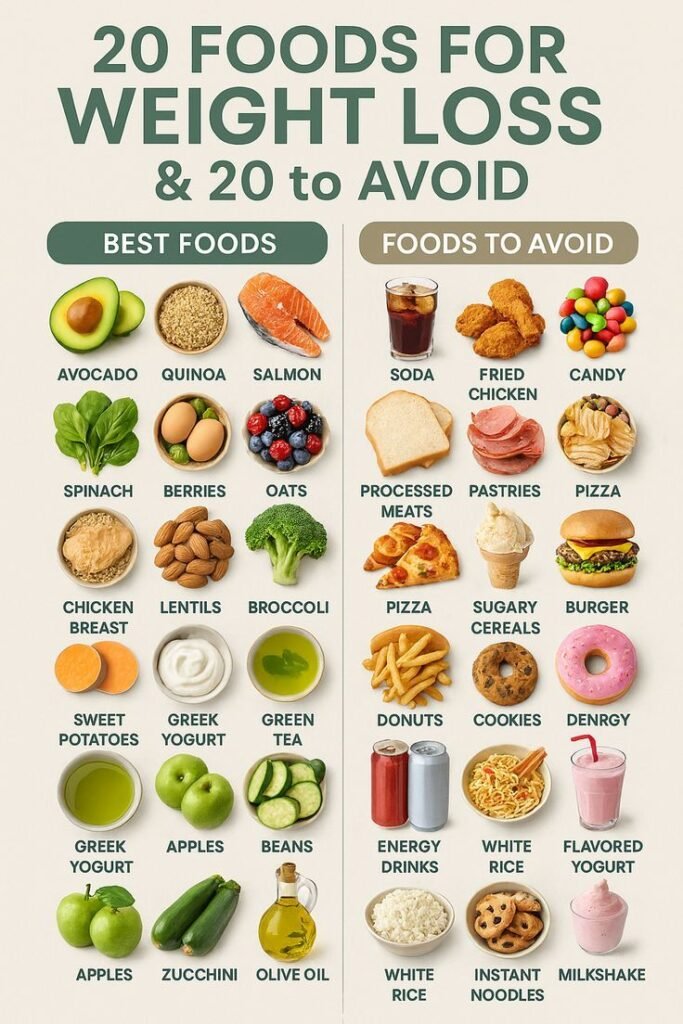
For better results, consider reducing:
- Sugary drinks
- Excessively processed foods
- Frequent fast food
- High-sugar snacks
- Large portions of fried foods
- Excessive amounts of calorie-dense sauces
- Large portions of unhealthy snack foods
The goal is not perfection. A sustainable diet should allow flexibility while making nutritious foods the foundation of your meals.
Instead of focusing only on foods to avoid, focus on adding more nutritious weight loss foods to your everyday meals.
Common Mistakes to Avoid When Trying to Lose Weight
Skipping Meals Too Often
Skipping meals does not automatically lead to better weight loss. For some people, going too long without eating can result in excessive hunger and overeating later.
Instead, focus on a meal pattern that fits your schedule and helps you manage hunger.
Eating Only Salads
Salads can be healthy, but a salad made mostly of vegetables may not provide enough protein or energy to keep you satisfied.
Add protein such as chicken, fish, eggs, beans, or lentils and include a reasonable amount of healthy fat.
Completely Avoiding Carbohydrates
Carbohydrates are not automatically unhealthy.
Foods such as oats, beans, lentils, brown rice, fruits, and sweet potatoes can provide important nutrients and energy.
The focus should be on food quality and portion sizes rather than eliminating an entire nutrient group.
Relying on “Fat-Burning” Foods
There is no single food that can replace a balanced diet and healthy lifestyle.
Green tea, spicy foods, or other foods may have interesting nutritional properties, but successful weight management depends primarily on your overall calorie intake, food quality, physical activity, sleep, and consistency.
Eating Too Many Healthy Snacks
Healthy snacks can still contain calories.
Nuts, avocado, dried fruit, and nut butters can be nutritious, but large portions can add significant calories to your diet.
Portion awareness remains important.
How to Build a Balanced Weight-Loss Plate
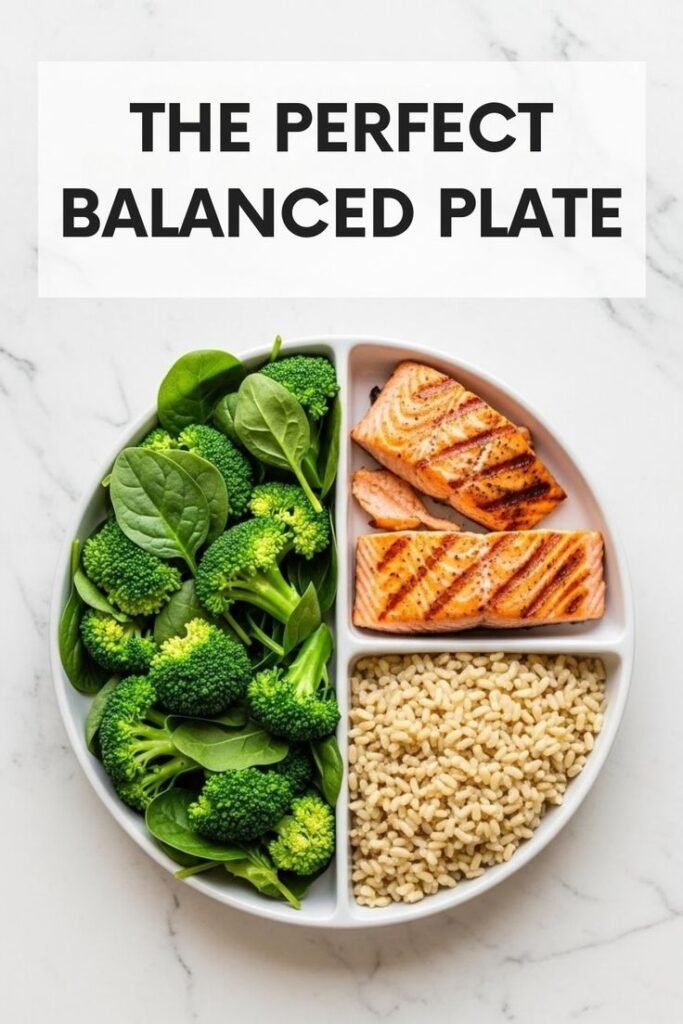
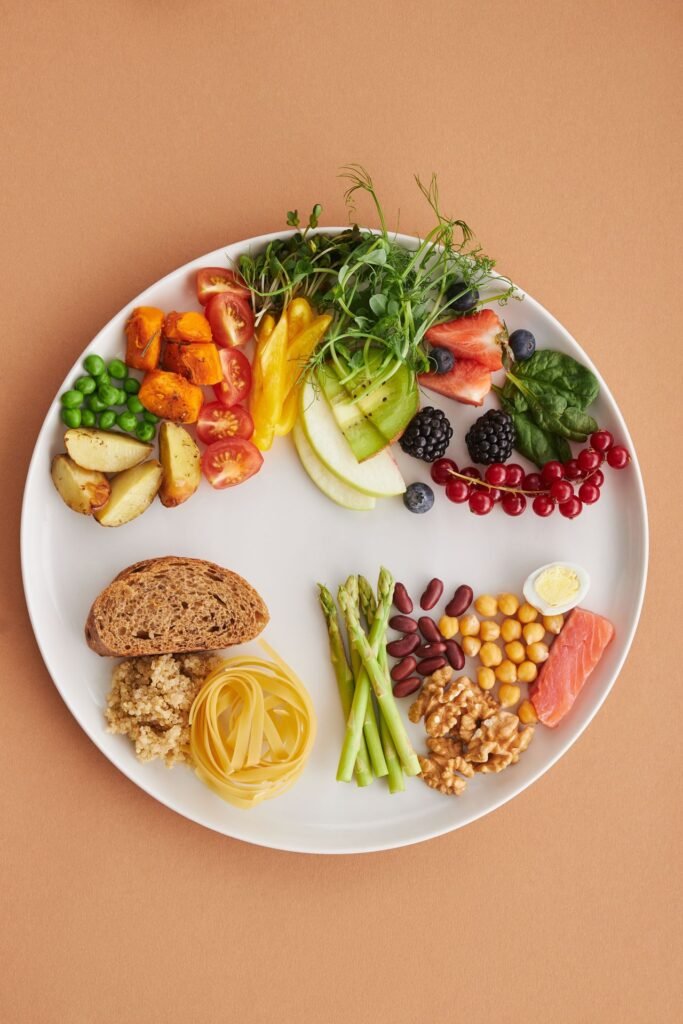
A simple plate method can make healthy eating easier.
Using a variety of weight loss foods from different food groups can help you build balanced and satisfying plates.
Start by filling a large portion of your plate with vegetables. Then add a source of protein such as chicken, fish, eggs, beans, lentils, or lean beef.
Next, include a moderate portion of nutritious carbohydrates such as brown rice, oats, sweet potatoes, or whole grains.
Finally, add a small amount of healthy fat from foods such as avocado, nuts, seeds, or olive oil.
This approach helps create meals that contain different nutrients without requiring complicated calculations for every meal.
Example One-Day Healthy Meal Plan
Breakfast
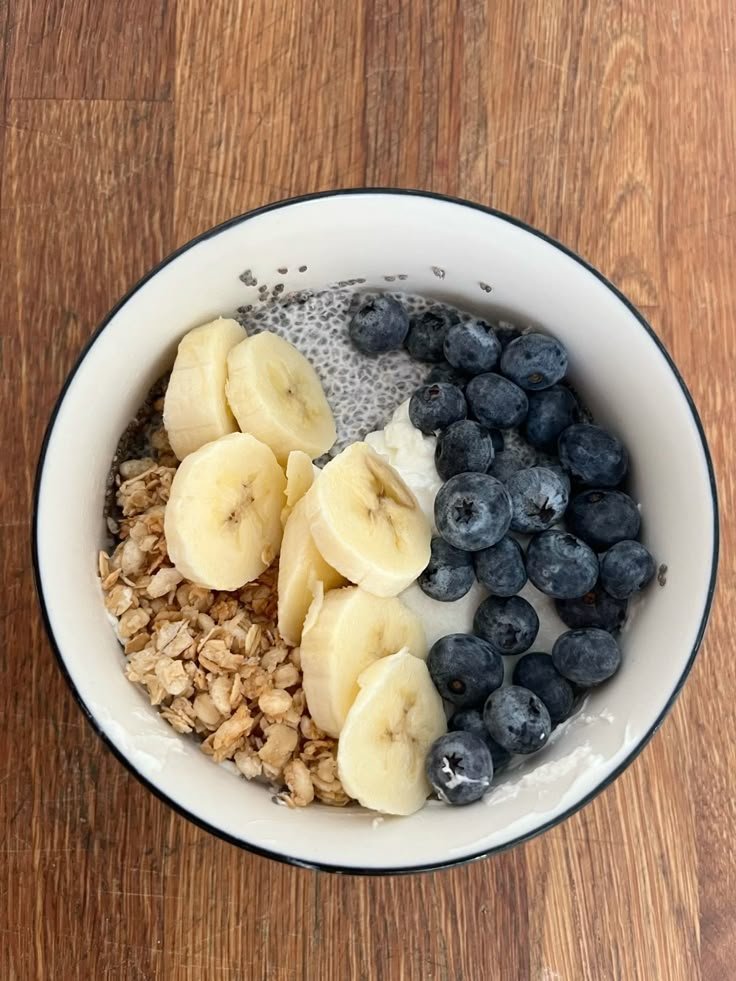
Oatmeal topped with blueberries, chia seeds, and plain Greek yogurt.
Mid-Morning Snack
One apple with a small portion of almonds.
Lunch
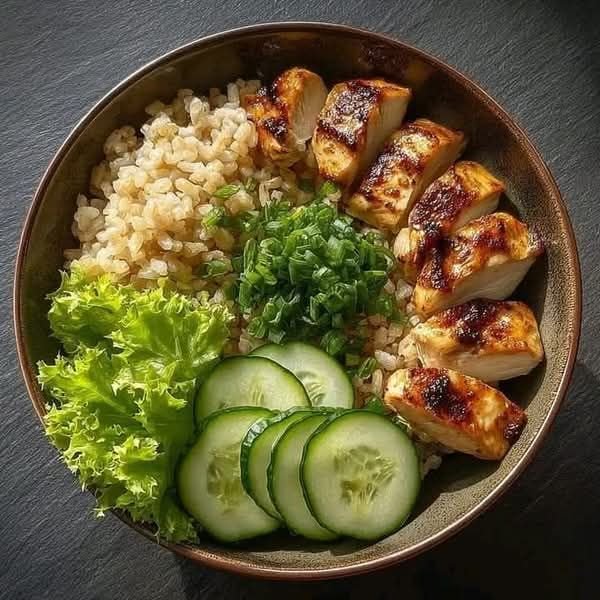
Grilled chicken breast with brown rice, broccoli, cucumber, tomatoes, and a moderate amount of avocado.
Afternoon Snack
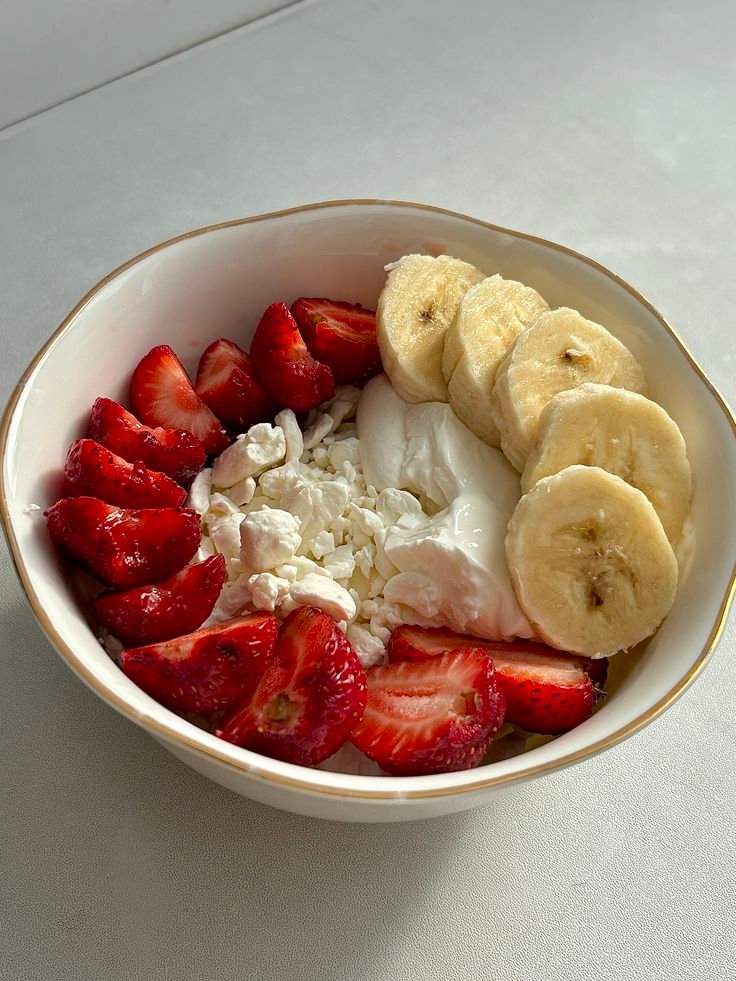
Cottage cheese with strawberries.
Dinner
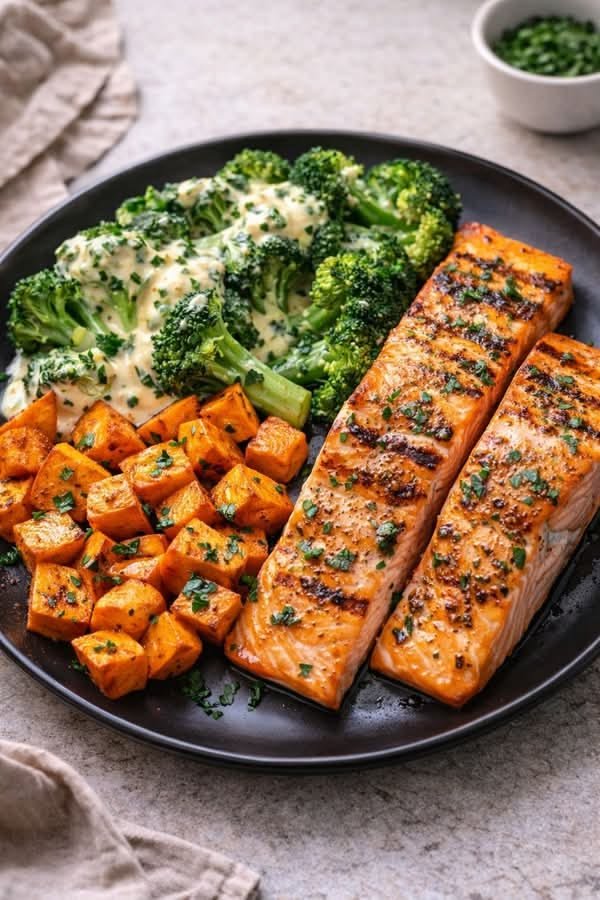
Baked fish with sweet potato and a large serving of leafy green vegetables.
Drink Choices
Water, unsweetened green tea, or other low-calorie beverages.
Remember that individual calorie and nutrient needs vary. A meal plan should be adjusted according to factors such as age, body size, activity level, goals, and individual dietary needs.
How Long Does It Take to See Weight-Loss Results?
Weight loss does not happen at exactly the same speed for everyone.
Your results can be influenced by:
- Food intake
- Physical activity
- Starting body weight
- Sleep
- Stress
- Genetics
- Consistency
- Overall lifestyle
Instead of focusing only on the scale, consider other signs of progress such as improved energy, better fitness, improved eating habits, increased strength, and better consistency.
Sustainable progress is generally more useful than trying to lose weight as quickly as possible.
Final Thoughts
Choosing the right Foods for Weight Loss can make your fitness journey easier and more sustainable. Including a variety of weight loss foods in your diet can help you maintain nutritious eating habits over time. Foods high in protein, fiber, and essential nutrients can help create satisfying meals while supporting a healthy overall diet.
For additional information about healthy weight management and lifestyle habits, visit the CDC’s healthy weight guidance.
The 20 foods in this guide—including eggs, leafy greens, chicken breast, fish, Greek yogurt, oats, beans, lentils, avocado, nuts, berries, apples, sweet potatoes, brown rice, cottage cheese, chia seeds, cucumbers, broccoli, lean beef, and green tea—can all have a place in a balanced eating pattern.
You can also use the 15 healthy breakfast ideas to start your day with nutritious and satisfying meals. Simple combinations such as oatmeal with berries, eggs with vegetables, Greek yogurt with fruit, or cottage cheese with apples can make healthy eating easier without requiring complicated recipes.
Remember that successful weight loss comes from a combination of healthy eating, regular physical activity, appropriate portions, sufficient sleep, and consistent lifestyle habits.
For a complete approach to weight loss, combine healthy eating with regular exercise. Our [Best Home Workout Routine Without Equipment for Weight Loss and Muscle Building] guide includes exercises you can do at home without expensive equipment.
You do not need to change everything at once. Start with small changes that you can maintain. Add more vegetables to your meals, choose protein-rich foods, replace sugary drinks with water, include more fiber-rich foods, and pay attention to portion sizes.
Most importantly, build an eating pattern that you can continue for the long term. Healthy weight loss is not about finding one perfect food or following an extreme diet. It is about making better choices consistently and creating habits that support your health and fitness goals.