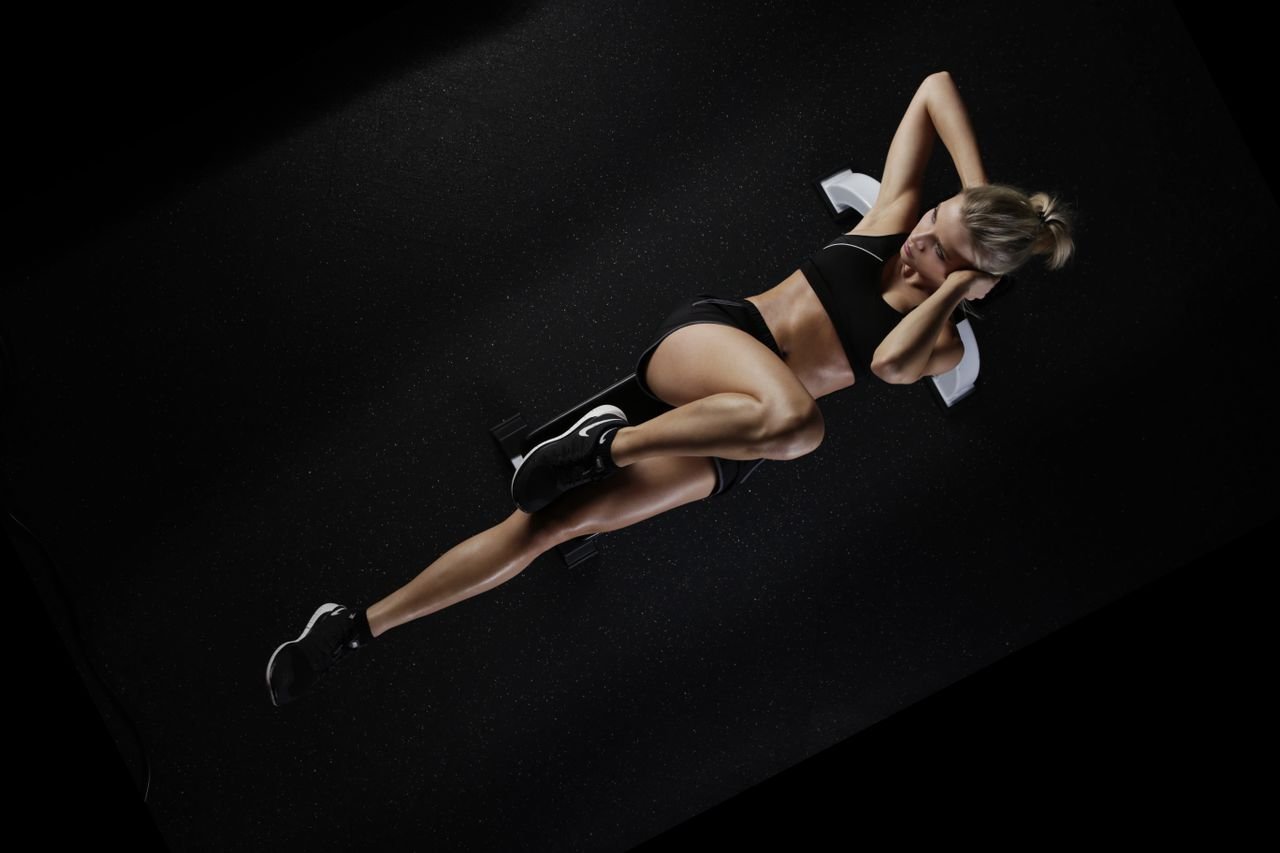
Starting a fitness journey does not always require an expensive gym membership, weights, or complicated equipment. With the right exercises and consistency, you can improve your strength, increase your fitness level, burn calories, and build stronger muscles from the comfort of your home.
A home workout routine without equipment is an effective option for beginners and experienced fitness enthusiasts who want to stay active using only bodyweight exercises. You can train your legs, chest, arms, shoulders, back, and core without needing machines or weights.
For evidence-based physical activity recommendations, see the American College of Sports Medicine (ACSM).
This home workout routine is designed to help you follow a simple plan at home while working toward better strength, fitness, and weight-management goals.
Whether your goal is losing excess body fat, building strength, improving endurance, or maintaining a healthy body, this guide gives you a practical routine you can actually follow.
You do not have to read the entire article before starting. If you are ready to exercise, use the workout below and come back to the detailed explanations whenever you need them.
Start Your Home Workout Routine Now
If you are ready to exercise, you can follow this home workout routine without equipment from beginning to end. You do not need to choose exercises or create your own workout. Simply complete the warm-up, follow each round, take the recommended rest, and finish with the cool-down.
Your 30-Minute Home Workout
Equipment: None
Workout type: Full body
Difficulty: Beginner to intermediate
Workout time: About 25–30 minutes
Warm-Up — 5 Minutes
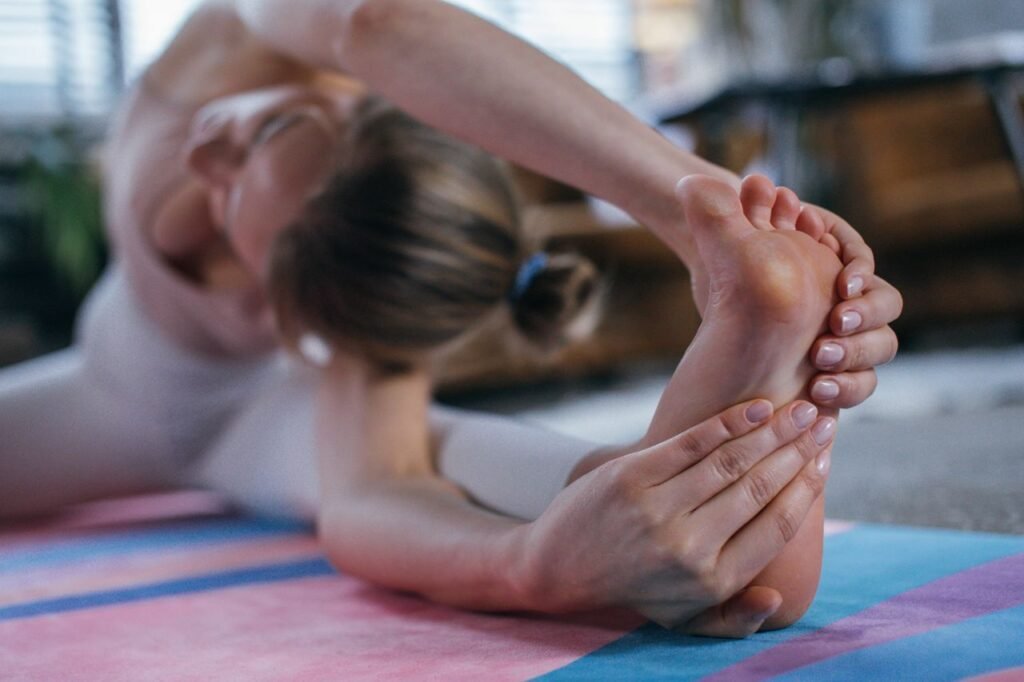
Start with a short warm-up to prepare your body for exercise.
- March in place – 1 minute
- Arm swings – 30 seconds
- Shoulder circles – 30 seconds
- Hip circles – 30 seconds
- Step jacks – 1 minute
- Slow bodyweight squats – 1 minute
After warming up, take a few deep breaths and begin the main workout.
This home workout routine without equipment is designed to give you a complete full-body workout in about 25–30 minutes.
Main Workout
Complete each exercise in order.
| Exercise | Amount | Rest |
|---|---|---|
| Bodyweight Squats | 15 reps | 30 sec |
| Push-Ups | 8–12 reps | 30 sec |
| Lunges | 10 each leg | 30 sec |
| Glute Bridges | 15 reps | 30 sec |
| Mountain Climbers | 30 sec | 30 sec |
| Plank | 30 sec | 30 sec |
| Jumping Jacks | 45 sec | 30 sec |
| Burpees | 8–10 reps | 1–2 min |
After completing all eight exercises, rest for 1–2 minutes and repeat the circuit.
Beginner: 2 rounds
Intermediate: 3 rounds
Advanced: 3 rounds with more challenging variations
Now let’s look at each exercise and how to perform it correctly.
What Is a Home Workout Routine?
A home workout routine without equipment is a structured exercise plan that you can complete at home without needing gym machines, dumbbells, or other specialized equipment.
Most no-equipment workouts use your body weight as resistance. Exercises such as squats, push-ups, lunges, planks, and glute bridges can train different muscle groups while improving your overall physical fitness.
Bodyweight exercises can help improve:
- Strength
- Balance
- Flexibility
- Muscular endurance
- Cardiovascular fitness
- Coordination
- Body control
- Overall fitness
The biggest advantage is convenience. You can exercise in your bedroom, living room, backyard, or another suitable space without spending time traveling to a gym.
Benefits of a Home Workout Routine Without Equipment
1. Supports Weight Loss
A home workout routine without equipment can make regular exercise easier to maintain because you can work out at home without needing a gym.
Regular physical activity can increase the amount of energy your body uses throughout the day. Combining exercise with a balanced eating pattern can support healthy weight management.
Exercises such as jumping jacks, mountain climbers, high knees, and burpees can increase your heart rate and make your workout more demanding.
However, exercise should not be viewed as a way to quickly lose weight. Sustainable progress usually comes from consistent physical activity, appropriate nutrition, adequate sleep, and other healthy habits.
2. Builds Muscle Strength
With a home workout routine without equipment, you do not necessarily need heavy weights to begin developing strength.
Bodyweight movements can challenge your muscles, especially when you use proper form and gradually increase the difficulty.
Exercises such as push-ups train the upper body, while squats and lunges challenge the lower body. Planks and other core exercises help develop stability.
As you become stronger, you can increase repetitions, add rounds, slow down the movement, reduce rest periods, or progress to more difficult variations.
3. Saves Time and Money
A home workout removes many common barriers to exercise.
You do not need to:
- Pay for a gym membership
- Drive to a gym
- Wait for equipment
- Spend time traveling
- Buy expensive machines
Even a 20–30 minute workout can fit into a busy day.
4. Easy for Beginners
Home workouts can be adjusted according to your current fitness level.
If regular push-ups are too difficult, you can use knee or wall push-ups. If jumping exercises are uncomfortable, you can use low-impact alternatives.
The goal is not to perform the hardest version immediately. The goal is to choose a variation you can perform safely and gradually improve.
A home workout routine without equipment can also be adjusted as your fitness level improves.
Best Home Workout Routine Without Equipment
This home workout routine without equipment is designed to train your major muscle groups using simple bodyweight exercises.
The following exercises create a full-body workout that targets your legs, chest, arms, shoulders, glutes, and core.
1. Bodyweight Squats
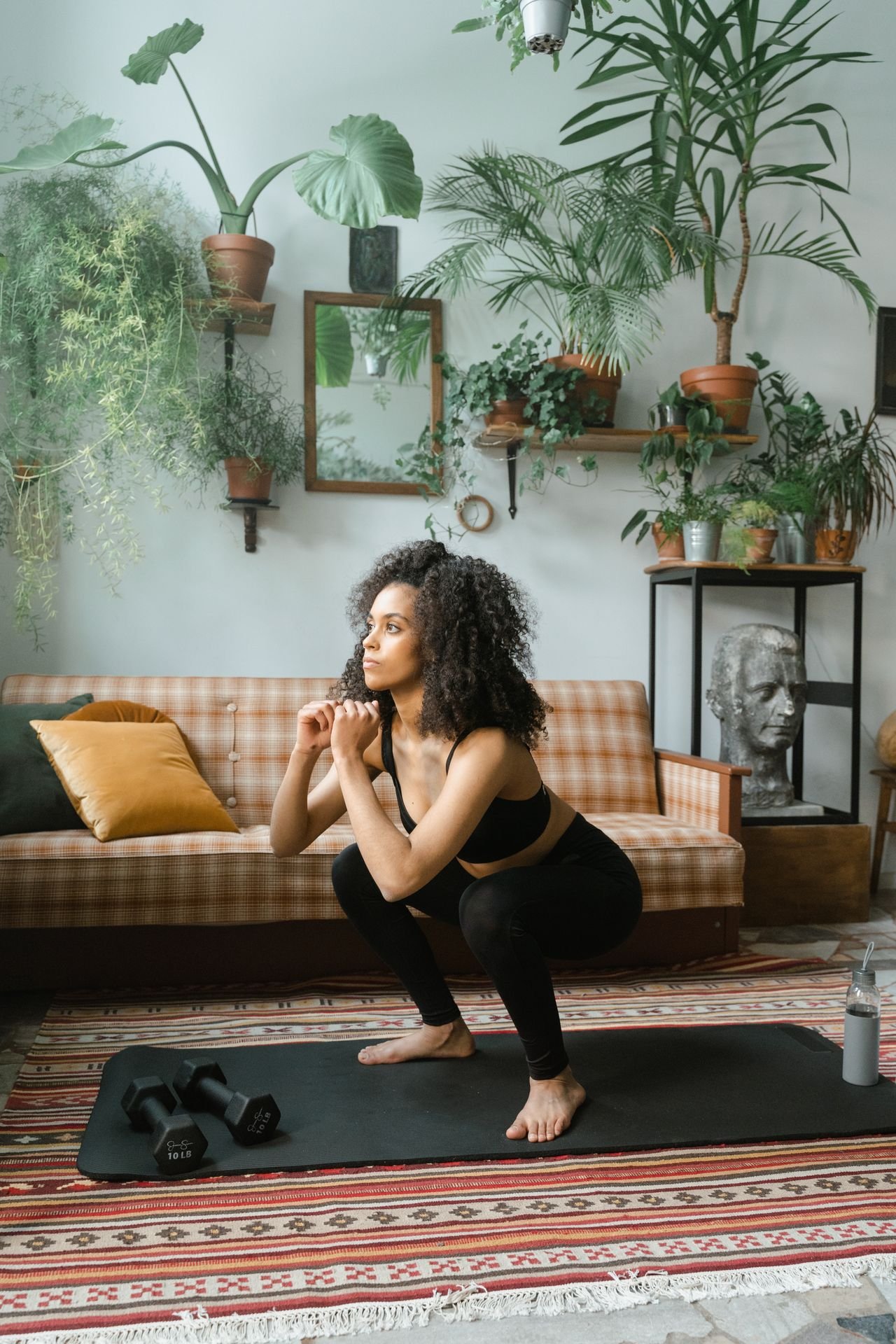
Bodyweight squats are one of the most useful lower bodies exercises you can perform at home. They target the thighs and glutes while also challenging your core and balance.
If you are looking for more beginner-friendly exercises, check out our guide to 10 Best Full Body Workout Exercises for Beginners to Build Strength and Fitness.
How to Do Squats
- Stand with your feet approximately shoulder-width apart.
- Keep your chest lifted and your back in a comfortable neutral position.
- Push your hips backward as you bend your knees.
- Lower your body as far as you can comfortably control.
- Push through your feet to return to standing.
Recommended: 3 sets of 12–15 repetitions.
Beginner Option
Use a chair behind you as a guide. Lower yourself toward the chair and stand back up without dropping heavily onto it.
Progression
Once 15 repetitions become easy, try slowing down the lowering portion of each squat or adding a pause at the bottom.
2. Push-Ups
Push-ups are a simple upper-body exercise that works the chest, shoulders, arms, and core.
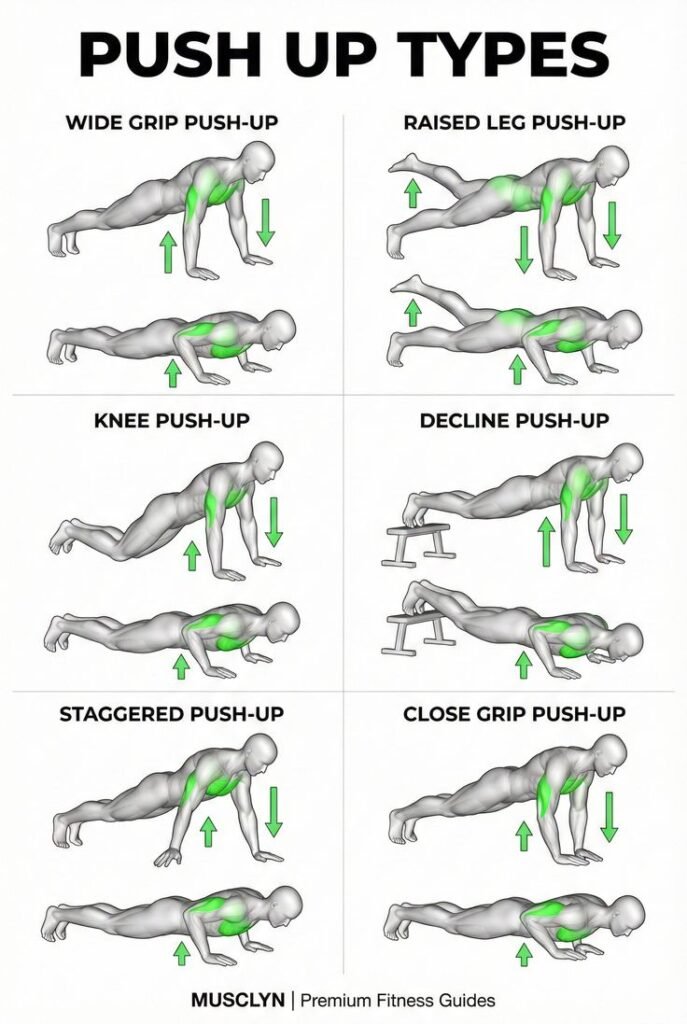
How to Do Push-Ups
- Place your hands on the floor slightly wider than your shoulders.
- Extend your legs behind you.
- Keep your body controlled and aligned.
- Bend your elbows and lower your chest toward the floor.
- Push through your hands to return to the starting position.
Recommended: 3 sets of 8–12 repetitions.
Beginner Option
Perform push-ups from your knees or against a sturdy wall.
Progression
When regular push-ups become easier, slow down each repetition or increase the number of repetitions.
3. Lunges
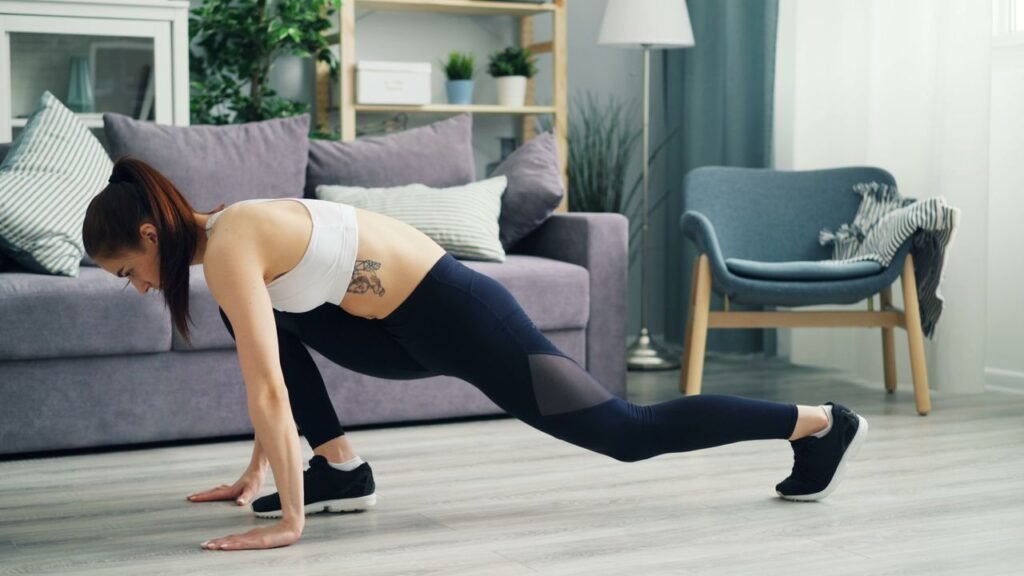
Lunges work one leg at a time and can help improve lower-body strength and balance.
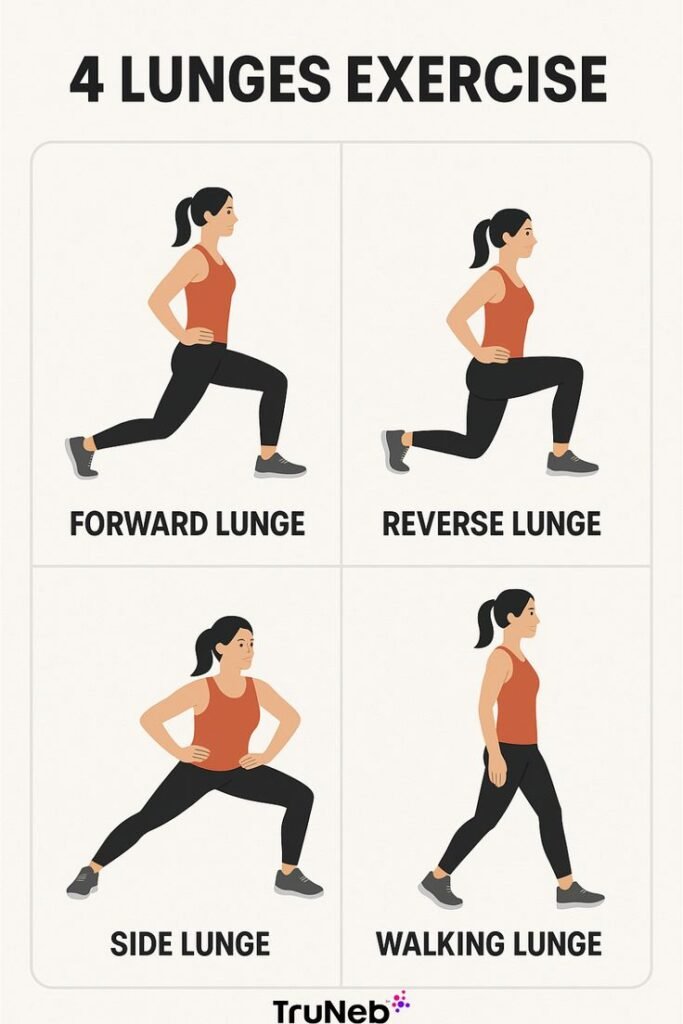
How to Do Lunges
- Stand upright with your feet comfortably apart.
- Step forward or backward with one leg.
- Bend both knees and lower your body.
- Keep your upper body controlled.
- Push through the front foot to return to the starting position.
- Repeat on the opposite leg.
Recommended: 10–12 repetitions per leg.
Beginner Option
Hold onto a wall for balance or use a smaller range of motion.
Progression
Increase repetitions or use slower, more controlled movements.
4. Plank
The plank is a simple exercise for strengthening the core and improving body stability.
How to Do a Plank
- Place your forearms on the floor.
- Extend your legs behind you.
- Keep your body in a straight line.
- Tighten your abdominal muscles.
- Keep your hips from dropping or rising too high.
- Hold the position while breathing normally.
Recommended: 20–60 seconds.
Beginner Option
Place your knees on the floor while keeping your core engaged.
Progression
Gradually increase your hold time as your core becomes stronger.
5. Mountain Climbers
Mountain climbers combine cardio and bodyweight training. They can increase your heart rate while challenging your core, shoulders, and legs.
How to Do Mountain Climbers
- Begin in a high-plank position.
- Bring one knee toward your chest.
- Return the leg to the starting position.
- Bring the opposite knee forward.
- Continue alternating.
Recommended: 20–30 seconds.
Beginner Option
Perform the movement slowly and bring one foot forward at a time.
Progression
Increase the working time while maintaining good form.
6. Glute Bridges
Glute bridges are useful for strengthening the glutes and supporting lower-body stability.
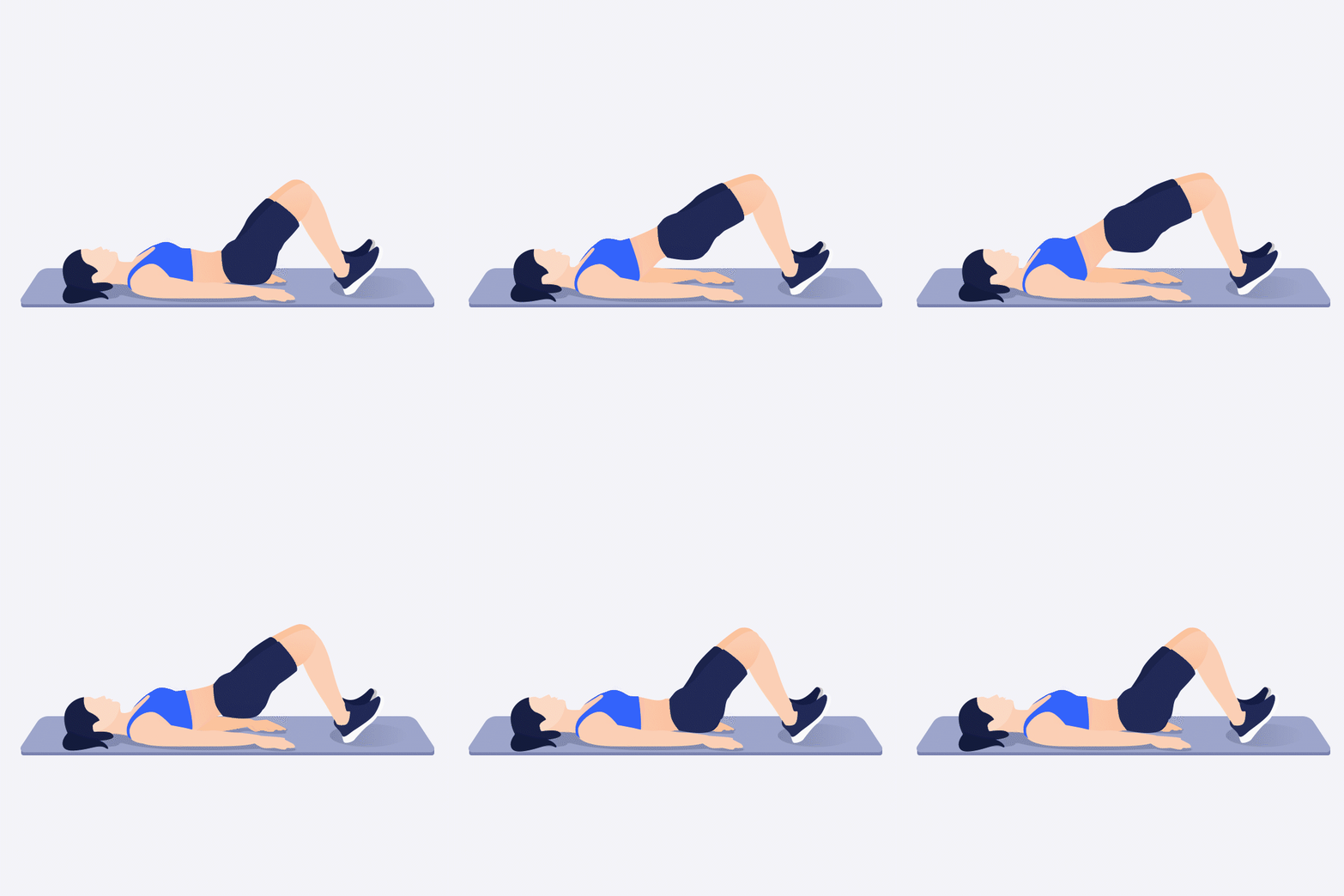
How to Do Glute Bridges
- Lie on your back.
- Bend your knees and place your feet flat on the floor.
- Keep your arms beside your body.
- Press through your feet.
- Raise your hips toward the ceiling.
- Squeeze your glutes at the top.
- Lower your hips slowly.
Recommended: 3 sets of 15 repetitions.
Beginner Option
Use a comfortable range of motion and focus on controlled movement.
Progression
Pause for two seconds at the top of each repetition.
7. Burpees
Burpees combine several movements and can make your workout more challenging. They work multiple muscle groups while also providing a cardiovascular challenge.
How to Do Burpees
- Start in a standing position.
- Lower into a squat.
- Place your hands on the floor.
- Step or jump your feet backward.
- Bring your feet forward again.
- Stand tall.
Recommended: 8–10 repetitions.
Beginner Option
Step your feet backward and forward instead of jumping.
Important Tip
Focus on controlled movement rather than trying to perform burpees as quickly as possible.
8. Jumping Jacks
Jumping jacks are a simple cardio exercise that can raise your heart rate and improve endurance.
How to Do Jumping Jacks
- Stand with your feet together.
- Jump your feet outward while raising your arms.
- Bring your feet back together.
- Lower your arms.
- Continue at a comfortable rhythm.
Recommended: 30–60 seconds.
Low-Impact Option
Step one foot outward at a time instead of jumping.
How to Turn These Exercises Into a Complete Workout
Knowing individual exercises is useful, but having a clear structure makes it easier to actually complete your workout.
This home workout routine without equipment can be completed in two or three rounds depending on your fitness level.
Start with the warm-up, then perform all eight exercises in order.
For example:
Round 1
Squats → Push-ups → Lunges → Glute bridges → Mountain climbers → Plank → Jumping jacks → Burpees
Rest for 1–2 minutes.
Then begin Round 2.
If you are still comfortable after Round 2, complete a third round.
The purpose is not to exhaust yourself as quickly as possible. A good workout should challenge you while allowing you to maintain reasonable technique.
For a more structured weekly routine, you can also follow our Ultimate Weekly Workout Plan for Fat Loss, Muscle Gain, and Better Fitness.
Beginner Weekly Home Workout Routine
You can use this home workout routine without equipment as a simple weekly exercise schedule.
This home workout routine can be adjusted according to your fitness level and weekly schedule.
You do not need to perform a hard workout every day.
Recovery is an important part of a fitness routine, so include lighter days and rest days.
Day 1: Full-Body Strength
- Squats – 15 reps
- Push-ups – 8–12 reps
- Lunges – 10 each leg
- Glute bridges – 15 reps
- Plank – 30 seconds
Complete 2–3 rounds.
Day 2: Light Cardio
Choose one:
- Walking
- Easy cycling
- Light jogging
- Low-impact home cardio
Aim for approximately 20–30 minutes at a comfortable intensity.
Day 3: Rest or Light Activity
Allow your body to recover.
You can perform gentle stretching or take an easy walk.
Day 4: Full-Body Training
Repeat the main workout.
If the first workout felt manageable, slightly increase repetitions or improve your exercise technique.
Day 5: Cardio and Conditioning
Perform:
- Jumping jacks – 45 seconds
- Mountain climbers – 30 seconds
- High knees – 30 seconds
- Step jacks – 45 seconds
Rest between movements and repeat 2–3 rounds.
Day 6: Optional Activity
Take a walk, stretch, or perform another enjoyable physical activity.
Day 7: Rest
Give your body time to recover before beginning another week.
How to Progress Without Equipment
A home workout routine without equipment can become more challenging as you gradually increase repetitions, rounds, or exercise difficulty.
One of the biggest challenges of bodyweight training is knowing how to continue progressing when you do not have heavier weights.
You can still make your workouts more challenging.
Increase Repetitions
If you can easily complete 10 push-ups, gradually work toward 12 or 15 while maintaining good form.
Increase Workout Rounds
Start with two rounds and eventually progress to three.
Reduce Rest
If your fitness improves, you can slightly reduce the amount of rest between exercises.
Slow Down
Performing a movement slowly can increase the amount of time your muscles spend working.
For example, instead of quickly dropping into a squat, lower your body for three seconds and then return to standing.
Use More Difficult Variations
You can progress from:
Wall push-ups → Knee push-ups → Regular push-ups
Regular squats → Pause squats → More challenging squat variations
Basic plank → Longer plank → More demanding plank variations
Tips for Weight Loss and Muscle Building at Home
Following a home workout routine without equipment consistently can help you build a regular exercise habit while working toward your fitness goals.
Following a consistent home workout routine for weight loss can make it easier to stay active when you do not have access to a gym. Combine regular exercise with balanced nutrition, adequate sleep, and daily movement to support your overall fitness goals.
1. Stay Consistent
Consistency is more important than completing one extremely difficult workout.
A 25-minute workout performed regularly is more useful than a two-hour workout that you only do once every few weeks.
Create a schedule that fits your lifestyle.
2. Increase Difficulty Gradually
Your body adapts to repeated exercise.
When your workout becomes easier, increase repetitions, add another round, reduce rest slightly, or choose a harder variation.
Avoid making several changes at once.
3. Eat Enough Protein
Protein provides amino acids needed for muscle repair and maintenance.
Include protein-rich foods such as:
- Eggs
- Fish
- Chicken
- Beans
- Lentils
- Yogurt
- Lean meats
Your overall diet should also include fruits, vegetables, whole grains, and healthy sources of fat.
For more guidance on healthy eating for weight loss, see our Healthy Meal Plan for Weight Loss: A Beginner’s Guide to Eating Better.
4. Drink Enough Water
Hydration is important for normal body function and exercise performance.
Drink water regularly throughout the day and pay attention to your body’s fluid needs, particularly during hot weather or longer workouts.
5. Get Quality Sleep
Recovery is an important part of fitness.
Your body needs adequate rest between challenging workouts. Try to maintain a consistent sleep schedule and give tired muscles time to recover.
Cardio vs. Strength Training
Both cardio and strength training have an important place in a balanced workout routine.
Cardio
Cardiovascular exercises increase your heart rate and help improve endurance.
Examples include:
- Jumping jacks
- Mountain climbers
- High knees
- Jogging in place
- Walking
- Burpees
Strength Training
Strength exercises challenge your muscles and can improve strength and muscular endurance.
Examples include:
- Squats
- Push-ups
- Lunges
- Glute bridges
- Planks
A combination of both can make a home workout more complete.
Common Mistakes to Avoid
Skipping the Warm-Up
Starting intense exercise without preparing your body can make the workout feel more difficult. Begin with several minutes of light movement.
Poor Exercise Form
Do not sacrifice technique simply to complete more repetitions.
Controlled movements are more important than rushing.
Doing Too Much Too Soon
If you are new to exercise, you do not need to complete four rounds immediately.
Start with two rounds and gradually increase your workload.
Training Without Rest
Rest days give your body an opportunity to recover.
If your muscles are very sore or fatigued, choose light activity instead of forcing another hard workout.
Expecting Immediate Results
Fitness changes take time.
Your strength, endurance, body composition, and overall fitness can improve gradually when you remain consistent.
Focus on what you can control rather than expecting dramatic changes within a few days.
What to Do After Your Workout
Finishing the last exercise does not mean you need to immediately leave.
Spend a few minutes cooling down.
Walk slowly, take deep breaths, and perform gentle stretches if they feel comfortable.
Then drink some water and have a balanced meal when appropriate.
After completing a home workout routine without equipment, allow your body enough time to recover before your next challenging session.
If your goal includes building muscle, make sure your overall diet provides enough protein and energy to support your training.
How to Make Your Home Workout More Practical
The best workout is one you can actually fit into your life.
A home workout routine without equipment is especially practical when you have limited time or space.
If you only have 20 minutes, complete two rounds instead of skipping the workout completely.
If you have more time, complete an additional round or add a longer walking session afterward.
You can also divide your activity throughout the day.
For example:
Morning: 10-minute bodyweight workout
Afternoon: 10–15 minute walk
Evening: 5–10 minutes of mobility or stretching
Small amounts of activity can add up over time.
Your Simple 4-Week Progression
You can use the following structure to make your routine easier to follow.
Week 1
Complete 2 rounds of the workout.
Focus on learning the exercises and improving your form.
Week 2
Continue with 2 rounds but try to increase repetitions slightly where appropriate.
Week 3
Move to 3 rounds if your body has adapted to the routine.
Week 4
Keep 3 rounds and try more challenging exercise variations or slightly shorter rest periods.
After four weeks, assess how the workout feels.
If it has become easy, continue progressing gradually.
Quick Workout Checklist
Before you finish today’s session, check your progress:
- Warmed up for 5 minutes
- Completed squats
- Completed push-ups
- Completed lunges
- Completed glute bridges
- Completed mountain climbers
- Completed plank
- Completed jumping jacks
- Completed burpees
- Finished 2–3 rounds
- Cooled down
- Drank water
You do not need to complete everything perfectly.
The most important thing is to keep showing up.
Frequently Asked Questions
Can I lose weight with home workouts without equipment?
Yes. Home workouts can increase physical activity and energy expenditure, which can support weight management. For weight loss, exercise works best as part of an overall healthy lifestyle that includes an appropriate eating pattern and regular daily movement.
Can I build muscle without going to the gym?
Bodyweight exercises can help improve muscular strength and endurance. Beginners can make meaningful progress through exercises such as squats, push-ups, lunges, and glute bridges.
As you become more advanced, additional resistance may eventually be useful for continued muscle growth.
How often should I do this workout?
A practical starting point is two or three full-body workouts per week, with rest or lighter activity between challenging sessions.
How long should a home workout last?
You can complete an effective session in around 20–30 minutes. The ideal duration depends on your fitness level, goals, schedule, and the intensity of the workout.
What if I cannot do a push-up?
Start with a wall push-up or knee push-up.
As your upper-body strength improves, gradually work toward a regular push-up.
What if jumping exercises hurt my knees?
Use low-impact alternatives.
Instead of jumping jacks, try step jacks. Instead of jumping during a burpee, step your feet backward and forward.
If you experience pain rather than normal exercise effort, stop the movement and consider getting appropriate professional advice.
Should I exercise every day?
You do not need to perform a hard workout every day.
Allow your body enough time to recover between demanding sessions. On rest days, you can walk, stretch, or perform other light activities if you feel comfortable.
What is the best time to work out?
The best time is the time you can consistently maintain.
Some people prefer exercising in the morning, while others have more energy in the afternoon or evening. Consistency is more important than choosing a specific hour.
Final Thoughts
A home workout routine without equipment can be a simple and practical way to become more active, improve strength, increase endurance, and support weight-loss goals.
You do not need a gym membership or expensive equipment to begin.
Start with the basic exercises in this guide:
Squats. Push-ups. Lunges. Glute bridges. Mountain climbers. Planks. Jumping jacks. Burpees.
Begin with two rounds if you are new to exercise. As your fitness improves, gradually increase your repetitions, workout rounds, or exercise difficulty.
Most importantly, do not wait until you feel perfectly ready.
Clear some space.
Warm up.
Start the first exercise.
Complete one round.
Then come back and do it again.
Your progress starts with the workout you actually do.
A consistent home workout routine can help you stay active, improve strength, and build healthier fitness habits without needing a gym. Start with exercises that match your current ability, follow the routine consistently, and gradually increase the challenge as you become stronger.