

A consistent Weekly Workout Plan is one of the best ways to organize your fitness routine and work toward your goals. Whether you want to lose fat, build muscle, improve endurance, or become healthier, having a structured workout schedule can help you stay consistent and motivated.
Many people struggle with fitness because they do not have a clear workout schedule. A good plan combines strength training, cardio, core exercises, and recovery to help your body become stronger and fitter over time.
This guide provides a balanced Weekly Workout Plan for beginners and fitness enthusiasts who want to improve their body composition, strength, endurance, and overall performance.
For general health, adults should aim for regular aerobic activity and muscle-strengthening exercises each week. The World Health Organization recommends 150–300 minutes of moderate-intensity aerobic activity per week for adults.
30 days fitness challenge
Why Follow a Weekly Workout Plan?
A Weekly Workout Plan gives your fitness journey structure and direction. Instead of randomly choosing exercises every day, you have a schedule that tells you which muscles and fitness areas to focus on.
Benefits include:
- Better workout consistency
- Improved muscle strength
- Increased cardiovascular fitness
- Better endurance
- Support for healthy weight management
- Easier progress tracking
- Balanced training
- Planned recovery
- Reduced chance of doing too much too quickly
A structured routine can also make exercise feel less overwhelming. When you know exactly what you need to do, it becomes easier to turn exercise into a regular habit.
The most effective workout plan is not necessarily the hardest one. It is the plan you can follow consistently while allowing your body enough time to recover.
Understanding Your Fitness Goals
Before starting a Weekly Workout Plan, think about what you want to achieve. Your goal can affect how much strength training, cardio, and recovery you include.
Fat Loss
If your main goal is losing body fat, combine regular exercise with a balanced eating pattern.
Useful activities include:
- Strength training
- Brisk walking
- Jogging
- Cycling
- Swimming
- Cardio workouts
- Regular daily movement
Exercise can increase your energy expenditure, while nutrition plays an important role in overall calorie balance.
Muscle Gain
Building muscle requires resistance training, adequate nutrition, and recovery.
Important factors include:
- Progressive strength training
- Enough protein
- Sufficient calories
- Quality sleep
- Consistent workouts
- Recovery between challenging sessions
You can use dumbbells, resistance bands, gym machines, or your own body weight to create resistance.
Better Overall Fitness
You may simply want to become stronger, more active, and healthier.
In this situation, your workout routine should include a combination of:
- Strength
- Cardio
- Core training
- Mobility
- Flexibility
- Recovery
- Daily activity
A balanced approach can help you develop several areas of fitness instead of focusing on only one.
The Ultimate Weekly Workout Plan
This Weekly Workout Plan combines strength training, cardio, core exercises, and recovery.
Beginners can reduce the number of sets or repetitions, while experienced exercisers can gradually increase resistance or workout intensity.
Monday: Full Body Strength Training
Start your week with a full-body strength workout that targets several major muscle groups.
Warm-Up

Spend about 5–10 minutes warming up before your workout.
You can use:
- Light walking
- Arm circles
- Leg swings
- Hip rotations
- Bodyweight squats
- Gentle mobility exercises
Workout
- Squats — 3 sets of 10–12 repetitions
- Push-ups — 3 sets of 8–12 repetitions
- Dumbbell rows — 3 sets of 10–12 repetitions
- Lunges — 3 sets of 10 each leg
- Glute bridges — 3 sets of 12–15 repetitions
- Plank — 3 rounds of 30–60 seconds
Rest between sets as needed.
Focus on controlled movements and good technique rather than trying to lift as much weight as possible.
Full-body workouts are particularly useful for beginners because they allow you to train several major muscle groups without needing a complicated schedule.
For another home-based routine, see our Best Home Workout Routine.
Tuesday: Cardio and Core Workout
Tuesday focuses on cardiovascular fitness and core strength.
Cardio

Choose an activity you enjoy:
- Walking
- Jogging
- Cycling
- Swimming
- Dancing
- Elliptical training
Aim for approximately 25–40 minutes depending on your current fitness level.
Core Workout
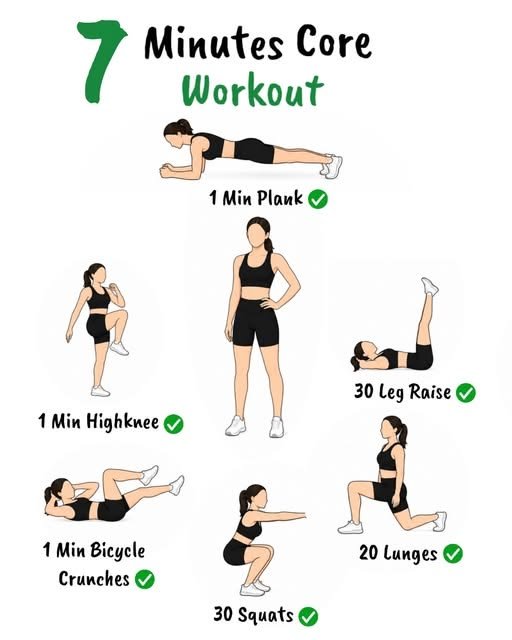
After your cardio session, try:
- Mountain climbers — 3 sets of 20
- Leg raises — 3 sets of 10–12
- Bicycle crunches — 3 sets of 15 each side
- Plank — 3 rounds of 30–60 seconds
Your core helps stabilize your body during many movements. A stronger core can support good posture and movement control.
Wednesday: Lower Body Strength Training
Wednesday focuses on the legs, hips, and glutes.
Workout
- Squats — 4 sets of 8–12 repetitions
- Romanian deadlifts — 3 sets of 10–12 repetitions
- Step-ups — 3 sets of 10 each leg
- Glute bridges — 3 sets of 15 repetitions
- Calf raises — 3 sets of 15–20 repetitions
- Wall sit — 3 rounds of 30–60 seconds
Beginners can start with bodyweight movements.
As you become stronger, you can gradually introduce dumbbells, resistance bands, or other appropriate equipment.
Strong lower-body muscles can support walking, running, climbing stairs, balance, and everyday movement.
Thursday: Rest and Recovery
A good Weekly Workout Plan should include recovery.
You do not need to perform intense exercise every day.
On Thursday, choose lighter activities such as:
- Easy walking
- Gentle stretching
- Mobility exercises
- Light cycling
- Relaxation
Recovery gives your body time to adapt to training.
If you are experiencing significant soreness or fatigue, reduce your activity and give your body additional recovery time.
Friday: Upper Body Strength Training

Friday focuses on the chest, shoulders, back, arms, and upper-body muscles.
Workout
- Push-ups — 3 sets of 8–12 repetitions
- Shoulder press — 3 sets of 10 repetitions
- Dumbbell rows — 3 sets of 10–12 repetitions
- Lateral raises — 3 sets of 12–15 repetitions
- Biceps curls — 3 sets of 10–12 repetitions
- Triceps extensions — 3 sets of 10–12 repetitions
If you do not have equipment, you can use bodyweight variations or resistance bands.
Focus on moving through a comfortable range of motion and maintaining good form.
Saturday: Fat-Burning Cardio Workout

Saturday is a good opportunity for a longer cardio session.
Choose one activity that you enjoy:
- Running
- Fast walking
- Cycling
- Swimming
- Hiking
- Dancing
- HIIT
- Rowing
Aim for approximately 30–45 minutes depending on your fitness level.
Beginners do not need to start with high-intensity exercise. Brisk walking can be an excellent way to increase physical activity.
The CDC also recommends regular aerobic and muscle-strengthening activity as part of an active lifestyle.
Sunday: Active Recovery
Sunday can be your active recovery day.
Examples include:
- Walking
- Gentle yoga
- Stretching
- Light cycling
- Mobility exercises
- Easy outdoor activities
The goal is to remain lightly active without putting heavy stress on your muscles.
Active recovery can help you transition into another week of training while keeping your body moving.
10 best full body exercise workout exercise
How to Adjust the Weekly Workout Plan for Beginners
If you are new to exercise, you do not need to complete every exercise at full intensity.
Start with:
- 2 sets instead of 3
- Fewer repetitions
- Shorter cardio sessions
- Longer rest periods
- Bodyweight exercises
- Lower resistance
For example, during your first week you could complete 20–30 minutes of activity on training days.
As your fitness improves, gradually increase your workout duration, repetitions, or resistance.
Do not try to make major changes to everything at the same time.
How to Progress Each Week
Following exactly the same workout forever may eventually become less challenging.
Instead, gradually increase the difficulty.
You can increase:
- Weight
- Repetitions
- Sets
- Workout duration
- Walking distance
- Cardio intensity
- Exercise difficulty
This gradual increase is often called progressive overload.
For example, if you can comfortably complete three sets of 10 squats with good form, you could gradually work toward 12 repetitions or add appropriate resistance.
The goal is controlled progression, not exhausting yourself every workout.
Weekly Workout Plan for Fat Loss
If fat loss is your main goal, combine strength training with regular aerobic activity.
A simple schedule could look like this:
Monday: Full-body strength
Tuesday: Cardio and core
Wednesday: Lower-body strength
Thursday: Recovery
Friday: Upper-body strength
Saturday: Cardio
Sunday: Active recovery
Nutrition should also support your goal.
Build meals around:
- Protein
- Vegetables
- Fruits
- Whole grains
- Beans
- Healthy fats
Avoid relying on exercise alone while ignoring your eating habits.
A consistent combination of exercise and balanced nutrition can be more sustainable than extreme approaches.
Weekly Workout Plan for Muscle Building
If muscle growth is your main goal, resistance training should be a major part of your routine.
Progressive Training
Gradually challenge your muscles by increasing resistance, repetitions, or exercise difficulty.
Protein
Include protein-rich foods such as:
- Eggs
- Chicken
- Fish
- Greek yogurt
- Beans
- Lentils
- Lean meat
- Tofu
Recovery
Your muscles need recovery after challenging resistance workouts.
Balanced Nutrition
Your overall diet should provide enough energy and nutrients to support your training.
For more information about protein and muscle growth, read our guide on How Much Protein Do You Need to Build Muscle.
Weekly Workout Plan for Home
You do not need an expensive gym membership to begin exercising.
A home workout can include:
Lower Body
- Squats
- Lunges
- Glute bridges
- Step-ups
Upper Body
- Push-ups
- Wall push-ups
- Chair-supported exercises
Core
- Planks
- Bird dogs
- Leg raises
- Dead bugs
Cardio
- Walking
- Jogging
- Dancing
- Stair climbing
- Jumping jacks
You can later add resistance bands or dumbbells if you want additional challenge.
The Importance of Warm-Ups
Before strength training or intense cardio, spend several minutes preparing your body.
A warm-up can include:
- Walking
- Light jogging
- Arm circles
- Hip rotations
- Bodyweight squats
- Dynamic leg movements
Start slowly and gradually increase your intensity.
The purpose of a warm-up is to prepare your body for exercise, not to make you tired before the workout begins.
Why Recovery Matters
Exercise places stress on your muscles and body.
Recovery gives your body time to adapt.
Important recovery habits include:
- Getting enough sleep
- Eating balanced meals
- Drinking enough water
- Taking rest days
- Managing training intensity
- Avoiding excessive exercise
If you constantly feel exhausted or your performance keeps decreasing, you may need more recovery.
Protein and Nutrition for Your Workout Plan
Exercise and nutrition work together.
A balanced diet should provide several important nutrients.
Protein
Protein supports muscle repair and maintenance.
Carbohydrates
Carbohydrates provide energy for exercise and daily activities.
Healthy Fats
Healthy fats provide energy and support overall nutrition.
Fruits and Vegetables
Fruits and vegetables provide vitamins, minerals, fiber, and other nutrients.
For additional nutrition information, see our Nutrition Tips for a Stronger Body.
Hydration During Exercise
Water is important for normal body function and physical activity.
Drink water throughout the day and pay attention to your fluid needs during workouts.
You may need more fluids when:
- Exercising for longer periods
- Training in hot weather
- Sweating heavily
- Exercising outdoors
- Performing intense workouts
Staying hydrated can help you feel better during exercise and support normal physical function.
Common Workout Mistakes to Avoid
1. Doing Too Much Too Soon
Starting with extremely difficult workouts can make it difficult to remain consistent.
Start at a manageable level and progress gradually.
2. Skipping Warm-Ups
Going immediately into intense exercise may make your workout feel more difficult.
Take several minutes to prepare your body.
3. Ignoring Technique
Good form is more important than lifting heavy weights.
If you cannot control an exercise, reduce the resistance or choose an easier variation.
4. Training Every Day Without Recovery
More exercise is not always better.
A balanced routine should include easier days and recovery periods.
5. Ignoring Nutrition
Exercise and nutrition work together.
A balanced eating pattern provides energy and nutrients that support training and recovery.
6. Comparing Yourself With Others
Everyone starts at a different fitness level.
Focus on improving your own performance rather than comparing yourself with someone who has been training for years.
How to Stay Consistent With Your Weekly Workout Plan
Creating a workout plan is only the first step.
The bigger challenge is following it consistently.
Schedule Your Workouts
Treat your workout like an important appointment.
Choose specific days and times for exercise.
Choose Convenient Times
Exercise when you are most likely to have enough time and energy.
Keep Workouts Simple
You do not need dozens of exercises.
A simple routine can be effective when you perform it consistently.
Track Your Progress
Record:
- Weight used
- Repetitions
- Workout duration
- Walking distance
- Exercise difficulty
- How you feel
Tracking your progress can help you recognize improvements.
Celebrate Small Improvements
Progress is not always dramatic.
Being able to perform one more repetition, walk longer, or use slightly more resistance can all be signs of improvement.
What If You Miss a Workout?
Missing one workout does not ruin your progress.
Do not try to punish yourself by completing several workouts at once.
Instead, simply return to your schedule.
For example, if you miss Friday’s workout, continue with Saturday’s planned activity.
Long-term consistency matters much more than completing every workout perfectly.
When Should You Increase Workout Intensity?
Consider increasing your workout intensity when your current routine becomes easier and you can complete the exercises with good technique.
You may be ready to progress when:
- You complete all repetitions comfortably.
- Your form remains strong.
- You recover well between workouts.
- Your current resistance no longer feels challenging.
- Your workout feels easier than it did previously.
Increase difficulty gradually.
Cardio vs. Strength Training
Both cardio and strength training have an important place in a balanced Weekly Workout Plan.
Cardio
Cardio activities include:
- Walking
- Running
- Cycling
- Swimming
- Dancing
Cardio can improve cardiovascular fitness and help you become more physically active.
Strength Training
Strength exercises include:
- Squats
- Push-ups
- Rows
- Lunges
- Resistance exercises
Strength training can improve muscular fitness and help you build and maintain muscle.
You do not have to choose only one.
Combining both can create a more balanced fitness routine.
For a detailed comparison, read our guide to Cardio vs Strength Training.
How Long Does It Take to See Results?
Fitness results vary from person to person.
Your progress can depend on:
- Starting fitness level
- Training consistency
- Nutrition
- Sleep
- Genetics
- Exercise intensity
- Recovery
You may notice improvements in energy, endurance, coordination, and strength before seeing major physical changes.
Do not judge your progress only by body weight.
You can also track:
- Strength improvements
- Workout performance
- Measurements
- Energy levels
- Endurance
- Number of workouts completed
How to Make Your Weekly Workout Plan Sustainable
The best routine is one you can maintain.
Make your plan realistic by:
- Choosing exercises you enjoy
- Keeping workouts manageable
- Including recovery days
- Preparing healthy meals
- Setting realistic goals
- Increasing intensity slowly
- Allowing flexibility when life gets busy
If you enjoy walking, use walking as part of your cardio. If you prefer home workouts, you do not need to force yourself into a gym.
Your routine should fit your lifestyle.
Safety Tips Before Starting
If you are new to exercise, begin gradually.
Pay attention to how your body feels during training.
Stop exercising and seek appropriate medical attention if you experience unusual or severe symptoms such as chest pain, severe dizziness, or significant difficulty breathing.
If you have an injury, medical condition, or other health concern, speak with a qualified healthcare professional before beginning a new exercise program.
Frequently Asked Questions
How many days a week should I work out?
You can be physically active throughout the week while combining strength training and aerobic activity. Adults are generally advised to include muscle-strengthening activities on at least two days each week.
Can beginners follow this Weekly Workout Plan?
Yes. Beginners should reduce the number of sets, repetitions, resistance, or workout duration according to their current fitness level.
Can I lose weight with this workout plan?
A structured workout routine can support weight management, especially when combined with balanced nutrition and regular daily activity.
Do I need a gym?
No. Many effective exercises can be performed at home using bodyweight exercises or simple equipment.
Should I exercise every day?
You can remain physically active every day, but intense workouts do not need to happen every day. Include easier days and recovery periods.
Is cardio or strength training better?
Both have different benefits. A balanced fitness routine can include both strength training and cardio.
Final Thoughts
A Weekly Workout Plan can make your fitness journey more organized, consistent, and sustainable. By combining strength training, cardio, core exercises, and recovery, you can create a routine that supports fat loss, muscle building, endurance, and overall fitness.
Start at a level that matches your current ability. Focus on proper technique, increase your workload gradually, eat balanced meals, stay hydrated, and give your body enough time to recover.
You do not need to be perfect. The most important thing is to keep moving and follow a routine you can maintain over time.
For another structured challenge, check out our 30 Days Fitness Challenge.
For official physical activity guidance, you can also visit the World Health Organization and the CDC Physical Activity resources.
Focus Keyword: Weekly Workout Plan
SEO Meta Description: Weekly Workout Plan for fat loss, muscle building, cardio, strength, recovery, and better fitness with a simple 7-day routine.
Suggested Permalink: weekly-workout-plan
SEO Title: Weekly Workout Plan: 7-Day Routine for Fat Loss and Muscle Building