

When it comes to losing weight, many people ask an important question: Cardio vs Strength Training, which one is better for weight loss?
Both cardio and strength training can help you burn calories, improve fitness, and create a healthier body. However, they work in different ways. Cardio focuses mainly on increasing heart rate and burning calories during exercise, while strength training helps build muscle and improve body composition.
The best workout choice depends on your goals, fitness level, and lifestyle. In many cases, combining both types of exercise can provide the best results for long-term weight loss.
What Is Cardio Training?
Cardio, short for cardiovascular exercise, is any activity that increases your heart rate and improves your heart and lung health.
Understanding Cardio vs Strength Training can help you choose the right exercise approach for your weight-loss goals.
Common cardio exercises include:
- Walking
- Running
- Cycling
- Swimming
- Jumping rope
- Dancing
- HIIT workouts
Cardio exercises are effective for burning calories and improving endurance.
Cardio can also be easy to adapt to different fitness levels. Someone who is new to exercise might start with comfortable walking, while a more experienced person may choose jogging, cycling, swimming, or interval training.
The important thing is to choose an activity that you can perform safely and consistently.
Benefits of Cardio for Weight Loss
When comparing Cardio vs Strength Training, cardio is often the first option people consider for increasing calorie expenditure.
1. Burns Calories Quickly
Cardio workouts can burn a significant number of calories during a single session, making them useful for people who want to create a calorie deficit for weight loss.
The number of calories burned depends on factors such as body size, workout intensity, exercise duration, and the type of activity.
For example, walking may burn fewer calories per minute than running, but walking can be easier to perform regularly. Over time, consistency can matter more than choosing the hardest possible workout.
2. Improves Heart Health
Regular cardio strengthens your heart, improves blood circulation, and supports overall health.
The World Health Organization recommends that adults complete at least 150–300 minutes of moderate-intensity aerobic activity each week, or 75–150 minutes of vigorous-intensity activity, along with muscle-strengthening activities on at least two days per week.
For more information, you can read the World Health Organization physical activity recommendations.
3. Increases Endurance
Cardio helps you perform daily activities with more energy and less fatigue.
As your cardiovascular fitness improves, activities such as walking, climbing stairs, cycling, or jogging may become easier.
4. Easy for Beginners
Many cardio activities, such as walking, are simple and suitable for beginners.
You do not necessarily need expensive equipment or a gym membership to begin. Walking outdoors, dancing at home, or using stairs can all increase your physical activity.
5. Supports an Active Lifestyle
Cardio does not have to mean spending an hour on a treadmill. Physical activity can include walking for transportation, cycling, recreational activities, household tasks, or sports. WHO notes that physical activity includes movement performed during work, transportation, household activities, leisure, and exercise.
This makes it easier to find enjoyable ways to move throughout the day.
What Is Strength Training?
Strength training is a type of exercise that uses resistance to strengthen muscles. The resistance can come from weights, machines, resistance bands, or your own body weight.
Examples of strength training exercises include:
- Squats
- Push-ups
- Lunges
- Deadlifts
- Shoulder presses
- Planks
Strength training focuses on building muscle, improving strength, and changing body composition.
Strength training for beginning
In the Cardio vs Strength Training debate, strength training provides benefits that go beyond calories burned during a workout.
Strength training does not necessarily require heavy weights. Beginners can start with bodyweight exercises and gradually increase resistance as their strength improves.
The Centers for Disease Control and Prevention explains that muscle-strengthening activities can include lifting weights, resistance bands, bodyweight exercises such as push-ups and planks, and other activities that make muscles work harder than usual.
Benefits of Strength Training for Weight Loss
This is one of the main reasons Cardio vs Strength Training should not be viewed as an either-or decision.
1. Builds Lean Muscle
Strength training helps increase muscle mass. More muscle can support a healthier metabolism and improve your body’s ability to burn energy.
Building muscle also helps improve physical strength and functional fitness.
2. Improves Body Shape
While cardio helps reduce calories, strength training helps create a stronger and more toned appearance.
Someone can lose weight without significantly improving strength or muscle definition. Combining resistance training with weight management can help create a more balanced body composition.
3. Supports Long-Term Fat Loss
Building muscle can help you maintain a healthy body composition over time.
Strength training is particularly useful during weight loss because resistance exercise can help maintain muscle mass. The CDC’s physical activity guidelines specifically note that muscle-strengthening activity can help maintain muscle mass during weight loss.
4. Increases Strength
Strength training improves physical performance and makes everyday activities easier.
Stronger muscles can help with activities such as carrying groceries, climbing stairs, lifting objects, and participating in sports.
5. Supports Bone Health
Resistance exercise can also contribute to stronger bones and improved muscular fitness.
This is another reason strength training should not be viewed only as a method for building visible muscle.
Cardio vs Strength Training: Key Differences
Understanding the difference between these two workouts can help you choose the right approach.
| FeatureCardioStrength Training | ||
|---|---|---|
| Main Goal | Burn calories and improve endurance | Build muscle and increase strength |
| Main Benefit | Improves heart health | Improves muscle strength |
| Calories Burned | Usually higher during exercise | Can increase calorie burn over time |
| Equipment | Often requires little or no equipment | May use weights or resistance |
| Best For | Endurance and calorie burning | Muscle building and body shaping |
| Examples | Walking, running, cycling | Squats, push-ups, rows |
| Frequency | Can be performed several times weekly | Usually performed on specific training days |
Looking at Cardio vs Strength Training this way makes it easier to understand why both can have a place in a weight-loss routine.
Neither option is automatically better for everyone. Your ideal exercise routine depends on your goals, preferences, current fitness level, and schedule.
Which Is Better for Weight Loss?
The answer to Cardio vs Strength Training depends on your personal goals.
If your main goal is burning calories quickly, cardio can be very effective. Activities like running, cycling, and HIIT can help increase calorie expenditure.
However, strength training is also important because it helps preserve and build muscle while losing fat. Losing weight is not only about reducing the number on the scale; it is also about improving body composition.
For the best results, many fitness experts recommend combining both cardio and strength training.
Best Home Workout Routine
A combined approach gives you the advantages of both forms of exercise. Cardio can improve cardiovascular fitness and increase energy expenditure, while strength training can improve muscular strength and help maintain muscle during weight loss.
The most important factor is consistency. A workout routine that you enjoy and can follow for months is usually more useful than an extreme program that you stop after a few weeks.
The Best Combination Workout Plan for Weight Loss
A practical Cardio vs Strength Training plan should include both aerobic exercise and resistance exercise.
A balanced weekly routine may include:
Day 1: Strength Training
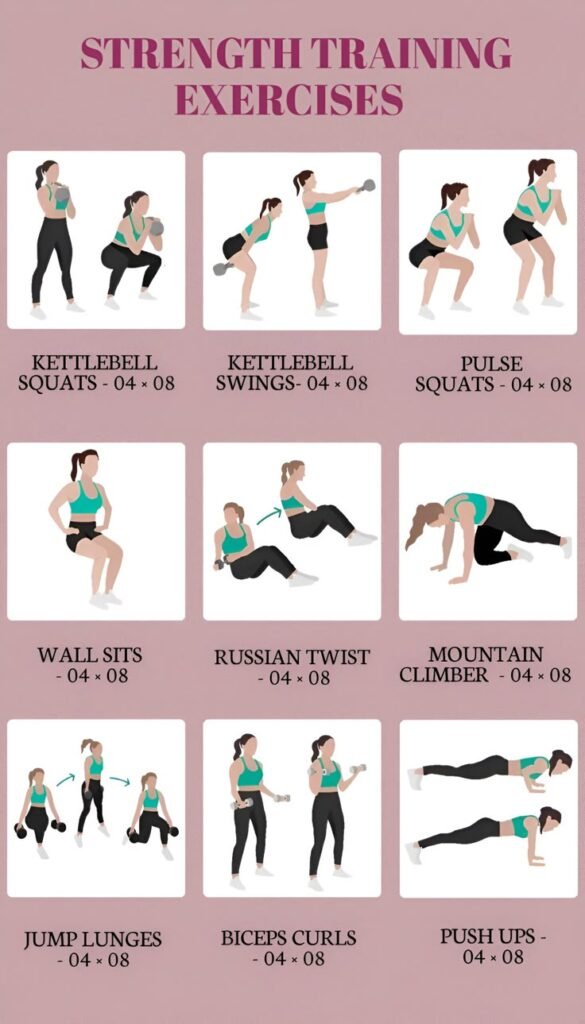
- Squats
- Push-ups
- Lunges
- Planks
Day 2: Cardio

- Walking
- Cycling
- Jogging
- Swimming
Day 3: Rest or Recovery

- Stretching
- Light walking
Day 4: Strength Training
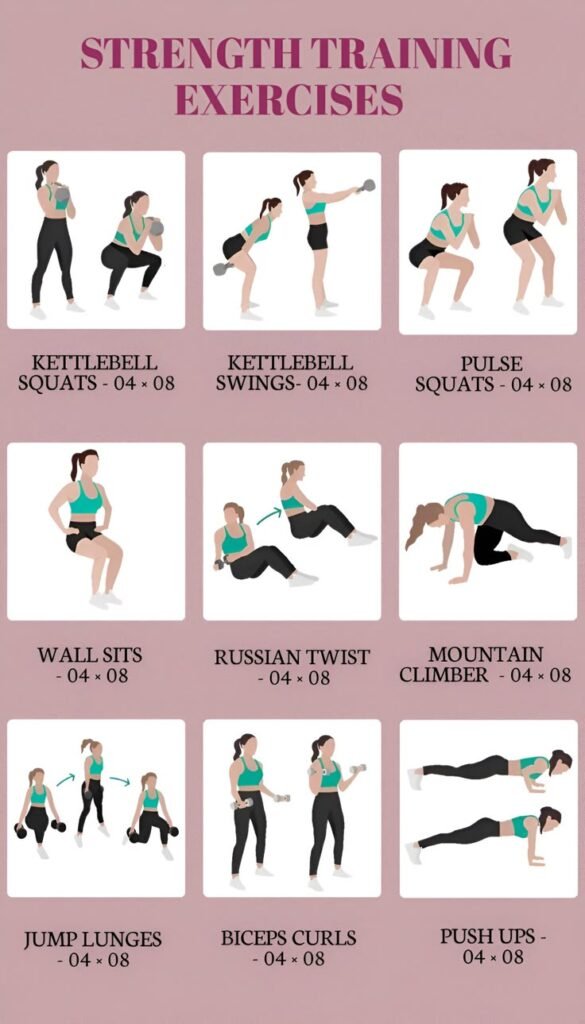
- Full-body resistance exercises
Day 5: Cardio

- 30–45 minutes of moderate cardio
You can adjust the schedule according to your fitness level and availability.
For example, a beginner could start with shorter workouts and fewer training days. As fitness improves, workout duration or intensity can gradually increase.
The Unlimited weakly workout plan
Cardio vs Strength Training for Beginners
For beginners, Cardio vs Strength Training does not need to be complicated; both can be introduced gradually.
Beginners do not need to perform complicated workouts.
A good starting plan can include:
- 2–3 days of strength training per week
- 2–3 days of cardio per week
- At least one rest or recovery day
Start slowly and increase intensity as your fitness improves.
If you have not exercised regularly, even small increases in activity can be beneficial. WHO recommends that inactive people start with small amounts of physical activity and gradually increase duration, frequency, and intensity over time.
This approach can make exercise feel more manageable and reduce the chance of doing too much too soon.
How to Combine Cardio and Strength Training
You can combine both types of exercise in several ways.
Option 1: Separate Days
Perform strength training on some days and cardio on others.
For example:
- Monday: Strength
- Tuesday: Cardio
- Wednesday: Rest
- Thursday: Strength
- Friday: Cardio
- Saturday: Light activity
- Sunday: Rest
This approach gives your muscles time to recover between strength sessions.
Option 2: Same-Day Training
You can also perform cardio and strength training during the same workout.
For example:
- Warm up for 5–10 minutes.
- Complete your strength workout.
- Finish with 15–30 minutes of moderate cardio.
This can be useful for people with busy schedules.
Option 3: Short Daily Sessions
You do not need to complete one long workout every day.
You might perform:
- 20 minutes of walking
- 20 minutes of strength exercises
- 10 minutes of stretching
Small sessions can add up and make exercise easier to fit into a busy lifestyle.
Cardio vs Strength Training for Fat Loss
Fat loss depends largely on creating an appropriate energy deficit over time.
Cardio can increase the amount of energy you use through physical activity. Strength training can help maintain or build muscle while you lose body fat.
The Cardio vs Strength Training approach works best when both exercise types are combined with sustainable nutrition habits.
For this reason, combining both forms of exercise can be a practical strategy.
However, exercise alone does not determine weight loss. Your food choices, portion sizes, sleep, daily activity, and consistency also matter.
A balanced approach is generally more sustainable than trying to burn as many calories as possible through exercise.
How Much Cardio Should You Do?
There is no single amount of cardio that works for everyone.
Your appropriate amount depends on:
- Your fitness level
- Your goals
- Your schedule
- Your recovery
- Your current activity level
For general health, WHO recommends 150–300 minutes of moderate aerobic activity per week or 75–150 minutes of vigorous activity for adults.
You can divide this amount across several days.
For example:
- 30 minutes × 5 days = 150 minutes
- 45 minutes × 4 days = 180 minutes
- 60 minutes × 5 days = 300 minutes
You can also combine moderate and vigorous activity.
How Often Should You Do Strength Training?
Adults should perform muscle-strengthening activities involving all major muscle groups on at least two days each week.
Beginners can start with full-body workouts that include exercises for:
- Legs
- Hips
- Back
- Chest
- Abdomen
- Shoulders
- Arms
The CDC notes that strength exercises should challenge the muscles and can include weights, resistance bands, and bodyweight exercises.
Common Mistakes to Avoid
1. Doing Only Cardio
Only doing cardio may help burn calories, but adding strength training can help maintain muscle while losing fat.
A balanced program can provide benefits that cardio alone cannot provide.
2. Ignoring Strength Training
Many people avoid weights because they think they will become too muscular. In reality, strength training helps create a stronger and healthier body.
Building significant muscle requires consistent resistance training and appropriate nutrition. Beginners should focus on improving strength, technique, and consistency rather than worrying about becoming overly muscular.
3. Exercising Without Proper Nutrition
Workout results depend on both exercise and diet. Eat balanced meals with enough protein, vegetables, and healthy foods.
Your body needs energy and nutrients to perform exercise and recover afterward.
4. Expecting Fast Results
Weight loss takes time. Focus on building consistent habits instead of looking for quick fixes.
Progress may not always appear immediately on the scale. Improvements in strength, endurance, energy, and fitness can also be signs that your routine is working.
5. Doing Too Much Too Soon
Increasing exercise too quickly can make workouts unnecessarily difficult.
Start with manageable sessions and gradually increase your workload as your fitness improves.
6. Skipping Recovery
Rest is part of a successful fitness routine.
Your body needs time to recover after challenging workouts. Recovery can include sleep, rest days, light walking, stretching, and adequate nutrition.
Nutrition Tips to Support Weight Loss
No workout plan is complete without healthy nutrition.
Focus on:
- Eating enough protein
- Choosing whole foods
- Drinking plenty of water
- Controlling portion sizes
- Limiting highly processed foods
A balanced diet supports energy, recovery, and long-term success.
Protein-rich foods such as eggs, fish, chicken, beans, lentils, Greek yogurt, and lean meats can help you create satisfying meals.
You should also include fruits, vegetables, whole grains, and healthy fats as part of a balanced eating pattern.
How much protein do you need to build muscle
Cardio and Strength Training With a Healthy Diet
Exercise and nutrition work together.
If you regularly exercise but consume more calories than your body needs, weight loss may be difficult.
At the same time, severely restricting food can make it harder to train, recover, and maintain your routine.
A better strategy is to focus on nutritious foods and reasonable portions.
A balanced meal could include:
- Lean protein
- Vegetables
- Whole grains or another carbohydrate source
- A moderate amount of healthy fat
- Water
This type of meal can provide nutrients needed for exercise and everyday activities.
How to Track Your Progress
Tracking your progress can help you understand whether your workout routine is working.
Instead of focusing only on body weight, consider tracking:
Strength
Are you able to perform more repetitions or use more resistance?
Endurance
Can you walk, run, cycle, or exercise for longer without becoming as tired?
Measurements
You can track changes in waist or other body measurements if that is useful for you.
Fitness Performance
Notice improvements in exercises such as squats, push-ups, lunges, or planks.
Daily Energy
You may also notice that everyday activities become easier as your fitness improves.
Remember that progress is not always linear. Some weeks may show faster changes than others.
Strength training for beginning
Cardio vs Strength Training: Which Burns More Calories?
Cardio often burns more calories during the workout itself, especially when performed at a moderate or vigorous intensity.
However, comparing the two only by calories burned during exercise does not tell the entire story.
Strength training helps develop and maintain muscle and can improve overall body composition. It also allows you to become stronger and more physically capable.
The best choice is therefore not necessarily the workout that burns the most calories in one session.
Instead, consider the workout that helps you stay active consistently while supporting your overall fitness goals.
Can You Lose Weight Without Cardio?
Yes. Weight loss can occur without traditional cardio if your overall energy intake and expenditure support weight loss.
Strength training, walking, daily movement, and nutrition can all contribute to managing body weight.
However, cardio provides important cardiovascular and endurance benefits, so there is still a good reason to include aerobic activity in a healthy lifestyle.
Can You Lose Weight With Strength Training Alone?
Strength training can contribute to weight management and improve body composition.
It is particularly useful for maintaining muscle during weight loss.
However, combining strength training with aerobic activity can help you develop both muscular and cardiovascular fitness. Current physical activity recommendations for adults include both aerobic activity and muscle-strengthening activity.
Cardio vs strength training
How to Choose the Right Workout for Your Goal
The right choice in Cardio vs Strength Training depends on what you want to achieve and which activities you can perform consistently.
If Your Main Goal Is Fat Loss
Combine:
- Strength training
- Cardio
- Balanced nutrition
- Consistent daily movement
If Your Main Goal Is Muscle Gain
Prioritize:
- Strength training
- Adequate protein
- Enough calories
- Recovery
- Progressive overload
If Your Main Goal Is Better Endurance
Focus more on:
- Walking
- Running
- Cycling
- Swimming
- Other aerobic activities
You can still include strength training to support overall fitness.
If Your Main Goal Is General Health
Use a combination of:
- Aerobic activity
- Strength training
- Flexibility or mobility work
- Regular daily movement
Safety Tips for Exercise
Before starting a new workout routine, consider your current fitness level and any limitations that could affect your ability to exercise safely.
Start gradually, especially if you have been inactive for a long time.
Pay attention to warning signs such as unusual pain, dizziness, or severe shortness of breath. If exercise causes concerning symptoms, stop and seek appropriate professional advice.
People with certain medical conditions may need individualized exercise recommendations. WHO notes that people with health conditions, disabilities, pregnancy, or postpartum considerations may need adjustments or additional precautions.
How to Stay Consistent With Your Workout Plan
Consistency is often more important than perfection.
Try these strategies:
Choose Exercises You Enjoy
If you enjoy walking, cycling, dancing, swimming, or strength training, you are more likely to continue.
Create a Schedule
Choose specific days and times for exercise.
Start With Realistic Goals
Do not try to completely change your lifestyle overnight.
Track Your Workouts
Write down exercises, repetitions, duration, or distance.
Give Yourself Recovery Time
Rest days can help you return to training with better energy.
Final Thoughts
The debate of Cardio vs Strength Training does not have one simple answer. Both workouts provide valuable benefits for weight loss and overall health.
Cardio helps burn calories and improve endurance, while strength training builds muscle and supports long-term body transformation.
For the best results, combine both exercises with a healthy diet and consistent lifestyle habits. The best workout is the one you can follow regularly and enjoy.
Ultimately, Cardio vs Strength Training is less about choosing one winner and more about finding the right balance for your goals.
A balanced exercise routine can include aerobic activity several times per week and muscle-strengthening workouts on at least two days. This matches current WHO recommendations for adults.
You can learn more about evidence-based activity recommendations from the CDC Physical Activity Guidelines and the World Health Organization physical activity guidance.
Start where you are, progress gradually, and focus on building habits that you can maintain. Whether you prefer walking, running, cycling, home workouts, or weight training, regular movement can help you become stronger, fitter, and healthier over time.